Sunday, November 6, 2016

Don't Void the Warranty

Image result for void the warranty

Under certain circumstances, especially when the consumer has used a product for something other than its intended purpose, a merchant may choose not to honor the terms of a warranty by declaring it void. 
But sometimes merchants may attempt to void a warranty for reasons that are strictly prohibited by the Magnuson-Moss Warranty Act, a federal law governing most consumer purchases in the U.S., or various state laws.
While the federal act establishes a groundwork for U.S. consumers, state laws add another layer and often more protections for consumers. 

Even if your written warranty is voided, you may be protected by an implied warranty.

Image result for void the warranty


The best way to protect your interests and avoid having your warranty invalidated is to fully understand the terms of your warranty. 

And of course, reading the fine print if it is a limited warrantyFull warranties are much less common than limited ones and are legally required to cover all repairs or replacements pertaining to defects within the warranty period.
Therefore, reasons for voiding a limited warranty usually vary with the manufacturer or individual product. Understanding the conditions and limitations of a warranty will usually inform you of when the warranty can and cannot be invalidated. 
Ask yourself the following questions when making a major purchase:
  • How long does the warranty cover your purchase?
  • Does the warranty cover repair, replacement, or a refund if the product fails?
  • Who should you contact and what are the procedures for obtaining warranty service?
  • Which parts and problems are covered by the warranty? Which are specifically excluded?
  • Does the warranty also cover "consequential damages," such as the cost of spoiled food when a freezer fails to operate?
  • Are there any modifications, changes or unauthorized uses of the product that could void the warranty? Under federal law, the merchant must prove that a defect was caused by the alteration in order to void a written warranty.
  • If it is a so-called "lifetime" warranty, does this mean the life of the product or the life of the owner?
  • Is the merchant a reputable company?

Below are some of the most common reasons warranties are invalidated by merchants:
  • The warranty period has expired
  • The defect or part is not covered
  • The product failure is due to misuse or lack of proper maintenance
  • You have made significant alterations to the product, affecting its performance
Image result for voided warranty


The terms of limited warranties differ from one company to the next, and sometimes even within one company's product line. The following examples illustrate this diversity:

  • Apple: The act of "jailbreaking" an iPhone, whereby users override built-in limitations in order to run unapproved software, voids its warranty. Jailbreaking is legal, though.
  • Kohler: The company's lifetime limited warranty covers its faucets for as long as the original purchaser owns his or her home. The policy states that "improper care and cleaning will void the warranty."
  • Chevrolet: Its "bumper-to-bumper" warranty covers the first three years or 36,000 miles. Among other exclusions, the policy does not cover coolant hoses, the engine radiator, or clutch.
  • Integrity Windows and Doors: Its limited warranty covers stress cracks caused by product defects for 10 years. Non-glass components are not covered for windows "installed within one mile of a sea coast."
  • Buck Knives: The knife maker's "forever" warranty is essentially a full lifetime warranty, with a few conditions. Knives damaged by misuse, improper maintenance, self-repair, or tampering are not covered.

Where are you going with this Tom????

An implied warranty is a contract law term for certain assurances that are presumed to be made in the sale of products or real property, due to the circumstances of the sale. These assurances are characterized as warranties irrespective of whether the seller has expressly promised them orally or in writing. They include an implied warranty of fitness for a particular purpose, an implied warranty of merchantability for products, implied warranty of workmanlike quality for services, and an implied warranty of habitability for a home.

Bring it home, Tom, bring it home! 

Warranty of Fitness, folks. It's all about 
Warranty of Fitness.

The warranty of fitness for a particular purpose is implied when a buyer relies upon the seller to select the goods to fit a specific request. For example, this warranty is violated when a buyer asks a mechanic to provide snow tires and receives tires that are unsafe to use in snow. 

This implied warranty can also be expressly disclaimed by name, thereby shifting the risk of unfitness back to the buyer.

Did you catch that????  Shifting the risk of unfitness back to the buyer.

Major Purchase Alert!!!  November 8th 2016

The Oath of office of the President of the United States is the oath or affirmation that the President of the United States takes after assuming the presidency but before he or she begins the execution of the office. The wording is specified in Article II, Section One, Clause 8 of the United States Constitution:
Before he enter on the Execution of his Office, he shall take the following Oath or Affirmation:—"I do solemnly swear (or affirm) that I will faithfully execute the Office of President of the United States, and will to the best of my ability, preserve, protect and defend the Constitution of the United States."
This clause is one of several that employ the oath concept, but it is the only clause that actually specifies the language of an oath for a constitutional officer. While the Oaths Clause in Article VI simply requires the persons specified therein to "be bound by oath or affirmation, to support this Constitution," the Presidential Oath Clause requires much more than this general oath of allegiance and fidelity. 
This clause enjoins the President to swear or affirm that they "will to the best of [his or her] Ability, preserve, protect and defend the Constitution of the United States."
Warranty of Fitness, folks. I hope that by now you can see that this blog was not about new cars or iPhones or flat screen TVs. We are talking about who has their fingers on the nuclear codesIt's all about Warranty of Fitness.

Image result for clinton vs trump
...to the best of his or her ability.......

Sunday, October 30, 2016

Sweet Bags o' Money!


Image result for pet halloween costumes 
We are going to spend over $8.4 Billion on Halloween this year. This is the total for all spending on costumes for adults, children, and pets. Plus the parties, the candy and the pumpkins. 

Adult costumes are expected to outsell children’s costumes, with spending reaching $1.2 billion and $950 million, respectively. And pet owners will drop $350 million on costumes for their animals. 


"Ethan" of Bedford-Stuyvesant poses for a photo as he "Trick or Treats" in Bedford-Stuyvesant, Brooklyn on October 31, 2013 in New York City.


candy corn Linda Vital (L) passes out candy to halloween revelers as they stop at a private residence on Greene St. in Clinton Hill, Brooklyn to "Trick or Treat" in Clinton Hill, Brooklyn on October 31, 2013 in New York City.

bowl of halloween candy
10 Billion pieces of candy corn that will be produced this year. Candy corn was introduced by the Wunderlee Candy Company in the 1880s, before the Goelitz Candy Company (now Jelly Belly Candy Company) started making it in 1900. It has remained largely unchanged, except for the pace of its production: In the early years, its arduous creation process meant it was only available in the fall; now, with modern machinery, it’s available year-round.  

Americans will spend at least $3.1 billion on candy, according to the National Retail Federation (the National Confectioners Association puts the number slightly higher) with 71% of consumers surveyed saying they will be passing out some of the sweet stuff this year.

HALLOWEEN movie, 1978
$400 Million: this is the worldwide box office revenues for all 10 movies in the Halloween franchise. The original, released in 1978, was shot for $300,000 in just 20 days and took in $47 million at the box office (equivalent to around $99.1 million today), making it the highest-grossing independent movie ever at the time.


$300 Million is the worth of the haunted house industry. There are 2,500 haunted attractions worldwide, according to NBC News, and prices for entry range from $15 to $40. The larger haunted houses can earn between $2 million and $3 million a season.


An actor depicting a deranged homeless man living with rats in a New York City alley is seen inside Nightmare: New York, a haunted house for adults, in New York October 22, 2014.
1.5 Billion pounds of pumpkin is produced each year in the U.S., making it one of the country’s most popular crops. At the Great Jack O’Lantern Blaze (pictured) in New York’s Van Cortlandt Manor, more than 7,000 hand-carved pumpkins line the grounds of the riverside estate.

151019_EM_Halloween_Pumpkins
Yes, we are setting a record for spending $8.4 Billion on Halloween this year. I wonder if Milton Hersey ever thought that his empire would become as big as it is today. 

Or if William Henry Atkinson the founder of the American Dental Association (established in 1859) would have thought that his organization would grow to more than 155,000 members.


The Hershey Company president and CEO J.P. Bilbrey (C) rings the NYSE Opening Bell at the New York Stock Exchange on October 31, 2014 in New York City.


Sunday, October 23, 2016

What's your favorite candy?

With Halloween just around the corner, thoughts of candy come to mind. If I asked you "what is your favorite candy?" how long would it take you to answer? I quickly named five. I am definitely a Almond Joy kinda guy. But I have been know to get a paper cut or two opening Reese's Peanut Butter Cup wrappers too fast. And I won't turn down a YORK Peppermint Pattie with the cool, refreshing taste of mint dipped in smooth dark chocolate.


Now, you can probably do the same with sports teams, cars, beer, food. It is probably easy to answer these questions, because we have been asked many times. What if I asked you this: what is your favorite charity? This seems to be a harder question to answer. At least, it is for me. 


Charity Navigator works to guide intelligent giving. I'm a fan, and in full disclosure, I donate my time and my money to the cause. 

By guiding intelligent giving, their aim is to advance a more efficient and responsive philanthropic marketplace, in which givers and the charities they support work in tandem to overcome our nation’s and the world’s most persistent challengesCharity Navigator was originally funded by the New York philanthropists, John and Marion Dugan, who believed that an unbiased charity evaluation tool needed to be created to help benevolent citizens make informed giving decisions. 

Charity Navigator has become the nation's largest and most-utilized evaluator of charities. In our quest to help donors, our team of professional analysts has examined tens of thousands of non-profit financial documents. We've used this knowledge to develop an unbiased, objective, numbers-based rating system to assess over 8,000 of America's best-known and some lesser known, but worthy, charities.

Charity Navigator's rating system examines two broad areas of a charity's performance; their Financial Health and their Accountability & Transparency. Ratings show givers how efficiently a charity will use their support today, how well it has sustained its programs and services over time and their level of commitment to good governance, best practices and openness with information. 

If you eat Halloween candy that has peanuts, and if you have a peanut allergy, you could find yourself in distress. You certainly would not want your child eating candy that would cause them harm. Maybe we need a "Charity Navigator" for candy?

Which charities qualify as “America’s 50 worst”? The Center for Investigative Reporting developed a methodology to compile the list that focused on those charities that, during the past decade, reported paying professional solicitation companies to troll for donations (groups with relatively few such fundraising campaigns or receiving  most of their funding from other sources were excluded from the analysis).  It’s a pretty horrifying and disgusting list. For example, Kids Wish spends less than three cents on every dollar raised to help kids, but has paid $4.8 million to the founder of the charity and his consulting firms. They are so abominable in their approaches that they truly give a bad name to the entire nonprofit sector.

Yes. I am a fan of the technology based evaluation systems that allows Charity Navigator to intelligently guide us. We want to make sure that our money is put to good use. After all, if we make a mistake, we have no one to blame but ourselves, right?  If there was only a "Charity Navigator" to guide us with true, accurate information for other key decisions in life. 

If there was only some way to get the facts - the true facts - when voting - for a piece of candy, or for supporting a charity. Or when donating money to a political party. Or when voting for the leader of the free world.    

It turns out that ALL CANDY is bad for you. There is NO GOOD CANDY. Some candy is better than others, but some candy, has nuts. 

And the nuts can kill you. 


Sunday, October 9, 2016

The time to get cloudy is before it gets cloudy


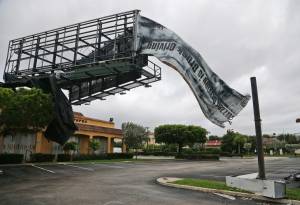
Matthew, the deadly storm that is spreading misery from the Caribbean to the Carolina coast, is no longer a hurricane. But it's still packing a powerful punch. The storm whipped North Carolina Sunday morning, causing "record-breaking" flooding and blowing powerful winds after killing at least 17 people in four states. As of 2 p.m. Sunday Matthew was about 150 miles east of Cape Hatteras, North Carolina, and heading east at 15 mph.


When a business has a loss of customer data, it might never recover. Any data loss could result in a loss of income. Missing one billing cycle can be enough to devastate a business. It is too late to preach to those who were in the path of Hurricane Matthew about backing up their business data, scanning paper documents, or moving phone and computer systems - moving a copy of everything - to the cloud.


Here on the east coast of the USA, we have been hit many times by severe storms in the past ten years. When a business suffers a loss of its records, its books, its data - this becomes the #1 reason for business to close its doors and never reopen.


This can all be avoided. Buildings can be rebuilt. Vehicles can be replaced. But once the data of a business is gone, it is gone forever.  


We live in a digital world. Our lives are now digital. Photos, contracts, records, anything on “paper” can be scanned, digitized and archived. This has been true for years. And yet, so many in business will have shuttered their doors before Matthew arrived, and they will never reopen when Matthew is just a bad memory. Over the next few weeks, companies all along the east coast of the USA will file for bankruptcy. All because they lost their data.


Hurricane Katrina – 2005
The Category 5 Hurricane Katrina by far tops this list. In the U.S., areas up and down the eastern seaboard felt Katrina. However, Florida, Mississippi, Alabama and especially Louisiana were hit incredibly hard. The image of the levy breaking in New Orleans is one that will stay with many of us for a long time. Hurricane Katrina was not only the costliest hurricane in U.S. history, incurring about $108 billion in damage, but it was also the 5th deadliest, claiming approximately 1,833 deaths.


Hurricane Sandy – 2012
If you were on the east coast of the United States in October of 2012, you definitely felt at least some effects of Hurricane Sandy. New York and New Jersey residents felt the full impact of the storm, with much of Manhattan being evacuated and significant portions of the Jersey Shore being completely destroyed. While Sandy was the deadliest and most destructive hurricane of the 2012 Atlantic storm season it was also the 2nd costliest hurricane in U.S. history. To date, Sandy has cost about $85 billion dollars, however the total cost is still being evaluated. Most of that cost is due to the 650,000 houses either damaged or destroyed by Sandy.


Loss of life is tragic during any Hurricane. But a storm can take the life of a business, too. Years ago, storms hit without warning. With the technology of today, we have advanced warning. We have time to prepare, time to get our families to safety. You can evacuate - but you cannot bring your business files with you. You cannot load filing cabinets into your car when you leave for higher ground.


Buildings can be replaced. Insurance policies can help a business to rebuild. But once your business data is gone, it is gone forever. It’s never coming back.


In business, some things can easily be replaced. 
Others, not so much. www.Ready.gov

Sunday, September 25, 2016

Aye, Aye Captain!

"Aye aye, sir" is a phrase commonly heard present day in naval language. It is derived from a duplicate of the word "aye" which came into the English language in the late 16th century and early 17th century, meaning "Yes; even so." It was common in dialect and is the formal word for voting "yes" in the English House of Commons. Its most common use is as a naval response indicating that an order has been received, is understood, and will be carried out immediately. It differs from "yes", which, in standard usage, could mean simple agreement without any intention to act. In naval custom, a reply of "yes sir" would indicate agreement to a statement that was not understood as an order or a requirement to do anything. 

The alternatives of "aye aye sir" and "yes sir" would allow any misunderstanding to be corrected at once. This might be a matter of life and death for a ship at sea. Basically, it means that the speaker understands and will obey a direct order.


Aye = Yes. Aye Aye = I understand, and I will comply.


In other words, it's the naval equivalent to the aeronautical difference between "Roger" and "Wilco." Roger = Message received. Wilco = Will comply. 

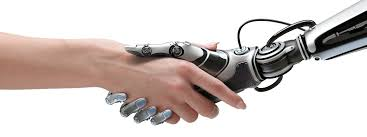
We now have AI.  AI = Artificial Intelligence. Artificial intelligence (AI) is intelligence exhibited by machines. Amazon.com CEO Jeff Bezos says we're at the earliest days of artificial intelligence and the influence it will have on consumers' lives. "It's hard to overstate how big of an impact it's going to have on society over the next 20 years," Bezos said on stage at the Code Conference in Rancho Palos Verdes, California.


NYDLA.org advisor Edward Hess, University of Virginia Professor of Business Administration and Batten Executive-in-Residence states: In the next five to 10 years, we will see businesses of all sizes impacted and challenged by a combination of technology advances, including artificial intelligence, global digital connectivity, the Internet of Things, Big Data, increasing computer power, Cloud AI SaaS Services, 3D manufacturing, smart robotics and the beginning of artificial emotional intelligence.


These technology advances combined will likely:


  1. Transform how most businesses are staffed, operated and managed
  2. Change the nature and availability of work in our society
  3. Infuse smart technology and data science into every business function
  4. Commoditize operational excellence
  5. Make innovation and human performance the primary value creation differentiators


The full article here http://ideas.darden.virginia.edu/2016/09/leadership-in-the-smart-machine-age-the-4es/

What once seemed to be many years away (pizza delivery via drones, self-driving cars, etc.) are now HERE. Today.


Self driving cars (and ships, buses, trains, aircraft?) are here now. And this means no more parking tickets, no more speeding tickets, and maybe even no more car accidents. What will this do to the economy? How many municipalities rely on income from parking and speeding tickets? If there are no more car accidents, what impact will that make on life-saving organ donations? Most organ donations are a result of car accidents.


A chatbot lawyer service set up by a teenage programmer to appeal parking tickets has helped overturn over $4m in fines since 2014. The DoNotPay bot is described by its 19-year-old creator Joshua Browder as “the world’s first robot lawyer” and has taken on 250,000 cases—winning 160,000 of them. Browder made the bot freely available and has described it as a tool to help prevent local governments taking advantage of their citizens.
Full article here http://www.newsweek.com/robot-lawyer-chatbor-donotpay-parking-tickets-475751?

What does IBM Watson mean for the world? Will a medical doctor ever “go against” the advice given by IBM Watson? And if so, what will taking (or not taking) medical advice from Watson do to malpractice insurance? If Watson was available - and you don’t ask Watson for advice, is that alone negligence and/or a form of malpractice?


How far away are we from IBM Watson (Attorney, Doctor, Teacher) affecting the global economy, especially via replacing jobs?


Aye = Yes  
Aye Aye = I understand, and will comply.

Remember, the difference between "Aye" and "Aye Aye" could be life and death, to a ship at sea. And now, we have gone from Aye Aye, to just "AI”. 

Who is the master and who is the servant? 

The AI genie has been released from the bottle - much sooner than anyone predicted.


Sunday, September 4, 2016

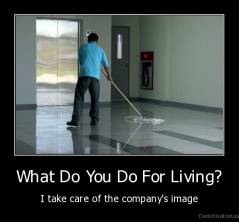
What do you do?

My friend David Burkus (www.DavidBurkus.com) does many things. One of them is running a really great podcast. He interviews cool people, and every podcast begins with the question: Who are you and what do you do? And everyone knows this question is coming, so they had time to prepare their answers. These people are some of the smartest people on the planet. And yet, many of them seem to struggle with their answer.


Labor Day in the United States is a public holiday celebrated on the first Monday in September. It honors the American labor movement and the contributions that workers have made to the strength, prosperity, and well-being of the country. It is the Monday of the long weekend known as Labor Day Weekend and it is considered the unofficial end of summer. I write this blog on a Sunday, smack in the middle of the “end of summer” celebration.


When we were kids, we would be asked: “What do you want to be when you grow up?” And we would shout out things like: Doctor! Fireman! Teacher! Policeman! Baseball Player! Nurse! Astronaut!


At such a young age, we could not know the difference in earning potential from one profession to another. As kids we answered this question based on pure emotion. What would it "be" like to become a Doctor? What would it “be” like to become a Fireman? What would it “be” like to become a professional athlete? We were too young to know or worry about little things like car payments and mortgages and student loans. Money had nothing to do with it.


Somewhere along the way, the questions went from “What do you want to BE when you grow up” to “What is your college major” and “What do you do for a living”.


The process shifted. It went from “being” something to “doing” something. And the money - exchanging our time on planet earth doing something - for money - entered the conversation.


When I was in High School in Boca Raton Florida, the Quarterback of the football team was - amazing. I knew him since the 7th grade. Every sport he played - baseball, track, basketball, everything - he just excelled. FAST! Oh, such a fast runner. He went on to college, and everyone knew that he was one day going to win the Super Bowl. It was going to happen! The talent, the skill was there - we just need to watch it all unfold! Then, there was an injury. And a few unlucky breaks.


There was no NFL career for my friend.


But he did pursue a career in football. The passion for the game was too strong. The love of the sport, the “fire in the belly” as they say, was too much to ignore.


Labor Day has become a holiday to celebrate and reflect on “what we do for a living” rather than what we do - since what we do is really who we are.


When we retire (if we ever CAN retire…..save that topic for another blog) we talk about our careers - as if once retired we have transformed into a different person. When we talk about our past work, when we reminisce about our past careers we are describing our identity, our purpose. The “thing” that we did for a living, the actions that we performed in exchange for compensation becomes everything.


As we celebrate the long holiday weekend, try to reflect on this interesting process. We go from “what do you want to be” to “what do you do” to “what did you do” - for a living

Don’t let the compensation (the money) that you exchange for your time on planet earth become your label. Parents: teaching moment for your kids!


What you do - and what you have done - should always match your passion. It should be your special purpose. Financial compensation has nothing to do with it. We all have bills to pay, we all have financial responsibilities. 

Passion needs to equal Profession.


The next time someone asks you “What do you do?” stop and ask yourself - do they want to know about my passion - or are they trying to figure out how much money I make? The secret to a successful life and career is to have “what do you do” and “what do you do for a living” have the same answer. 

Too often, the answer to these two questions are very different. And that is sad.


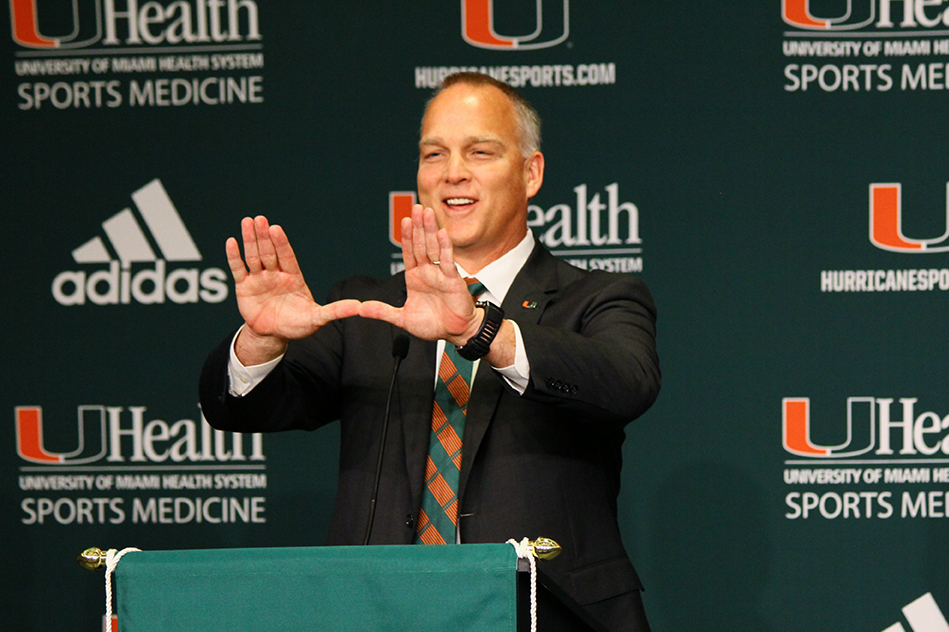
Mark Richt is the head coach of the University of Miami Hurricanes. Prior to Miami, Richt served as head coach at the University of Georgia for 15 years, Offensive Coordinator and Quarterbacks coach at Florida State University for 14 years, and as offensive coordinator at East Carolina University.