Sunday, August 2, 2015

A bad day of golf


There is a saying that “”A bad day at the golf course beats a good day at the office” and I think that is true. But what if your office IS the golf course?


Yesterday I "cashed in" my Father’s Day Gift from my son, Tommy. I used to love playing golf, twice a week (Wednesdays and Saturdays, like clockwork). I used to say that if I could not “be” a doctor, at least I can live like one! The best round of golf in my life was a 78 on a Pete Dye course. I was in the zone that day.


Yesterday was not that day.


After a three year break from the game of golf, yesterday was my first time on the links. The weather was perfect, the course was not crowded. As we pulled into the parking lot, the first thing that hit me was “why is no one here?” The weather is PERFECT for golf, and it is the weekend. This cannot be good. Is there something wrong with the course?


There was nothing wrong with the course. It was perfect.  So, what’s up with the un-crowded course? Ah, a sign of things to come. Perfect things.


We needed to get some food, and planned on eating at the course before playing golf. The restaurant on the course grounds was closed, with a “For Rent” sign in the window. That was it, just a little sign, everything was shuttered. First thing that came to mind as a businessman and entrepreneur was “well, if they could not make it here, why would I want to rent such a loser of a location?”


Why not have a sign in the window that says “Retired and moved to Florida! Life is Good! Call 555-444-1212 to rent this wonderful space!”


There was a girl selling hot dogs and drinks from a table. But she was taking “cash only” and was not prepared for making change of large bills.


Why not have Square or PayPal to swipe cards? This is a golf course, 99.999% of the people are going to have a credit card / debit card. Can you really afford (in this day and age) to NOT accept plastic, no matter WHERE you are - even on a golf course? We are in the age of the smartphone, Apple Pay and eCommerce everywhere. And it is so easy to add an extra 20% (or more) tip when you are showing off in front of your golf buddies, right? But, I bit my lip and did not lecture the poor kid on her missed opportunity.


Golf is an amazing game. My best memories are of spending Sunday afternoons playing golf with my father and his brother (my Uncle Tom Capone) in Saddle River, New Jersey. We had a standing tee time every Sunday at 1pm. The starter would call out in a booming voice on the PA system: “Capone, Capone, Capone…...and someone else..... to the first tee." I remember those days like they were yesterday. I would observe the dynamics of my father with his brother, the dynamics of my father with the golf pros, the dynamics of other golfers, everything. I think it was here that I first knew that I would one day become a salesman. Or a psychologist. Or both.


"You can observe a lot by just watching." - Yogi Berra


On the golf course: Does this person count every stroke? Really, every stroke? Do they have a $500 driver and a $5 swing? Do they know the rules, and observe the rules, or do they think the rules of the game are for everyone else? Are they courteous, are they good sports, or do they ruin the day for everyone else on the course?


Do they lose their temper easily? Do they find a way to enjoy themselves, even when losing a ball (or two, or three) into the water hazard? Can they recover from a bad shot? Do they give themselves the short putts, or do they take the game seriously?


So, I cannot shut down my brain, even on the golf course. Your brain does not take a day off, ever. And I think that is a good thing.


Yesterday I observed what an amazing young man my son has become. He is playing the game of golf - and the game of life - by the rules. There is another saying that goes: “Show me your friends, and I’ll show you who you are”. Yesterday we played with one of Tommy’s friends from High School. I would adopt that kid in a New York minute.


Did I mention that I beat both of these kids, even after my three year hiatus from the game? Of course I did not mention that - if I was bragging how my 54 year old former athletic body beat both of these kids in their 20’s, it would not be something that I would want the world to observe, right? So, let’s not bring it up again, this topic of me beating the both of them yesterday - after three years of not touching a club. Move on people, please!


OK, wrap it all up for us Tom…..


Who is Pete Dye?


Well, my observation would be this: if you really wanted to know, you would have Googled him by now.


Who is Yogi Berra?  Well, Wikipedia says:


Lawrence Peter "Yogi" Berra (born May 12, 1925) is a retired American Major League Baseball (MLB) catcher, manager, and coach. He played almost his entire 19-year baseball career (1946–65) for the New York Yankees. He is widely regarded as one of the best catchers in baseball history. He was elected to the Baseball Hall of Fame in 1972.


Berra was an All-Star for 15 seasons. He is one of only four players to be named the Most Valuable Player of the American League three times and is one of seven managers to lead both American and National League teams to the World Series. As a player, coach, or manager, Berra appeared in 21 World Series including 13 World Series championships. He was named to the Major League Baseball All-Century Team in a voting of fans in 1999.


Berra, who quit school after the eighth grade, was also known for his pithy and paradoxical quotes, such as "It ain't over 'til it's over", while speaking to reporters. Simultaneously denying and confirming his reputation, Berra once stated, "I really didn't say everything I said.


On a fine summer day way back in the 70’s the starter at Saddle River Country Club called out on the PA system: “Capone, Capone, Capone and Berra.”  True story. Thanks Dad.


Who is Thomas Anthony Capone?


Well, my many years of making keen Sherlock Holmes observations of people and their behaviors tells me this: My son is my life coach. He constantly reminds me that you can learn a lot by just watching.


In baseball, you can pitch a perfect game. But there is no such thing as a “perfect round of golf”.

Not true. We just had one yesterday. 


We need to keep that score card and frame it.


Sunday, July 19, 2015

Horse Thief!


Now that American Pharoah is the first Triple Crown winner in decades after his Belmont Stakes victory, his value could skyrocket to as much as $100 million over the next few years. If some terrible person stole this amazing animal and was later apprehended, what would be their punishment? Jail, most likely. But for how many years?

Would the death penalty be on the table?  No.

But many years ago, stealing a horse - any horse - would carry the penalty of death if you were caught - or even if you were merely accused!  No proof of a crime was necessary - just call someone a “Horse Thief” loud enough and they are looking for a rope. Why so harsh?

Horse theft was a well-known crime in medieval and early modern times and was severely punished in many areas. While many crimes were punished through ritualized shaming or banishment, horse theft often brought severe punishment, including branding, torture, exile and death. According to one 18th century treatise, the use of death as a punishment for horse theft stretches back as far as the first century AD, when the Germanic Chauci tribe would sentence horse thieves to death, while murderers would be sentenced to a fine. This practice derived from the wealth of the populace being in the form of livestock which ranged over large areas, meaning that the theft of animals could only be prevented through fear of the harsh punishment that would result

The term horse thief came into great popularity in the United States during the 19th century. During that time the Great Plains states, Texas, and other western states were sparsely populated and negligibly policed. As farmers tilled the land and migrants headed west through the Great Plains, their horses became subject to theft. Since these farmers and migrants depended on their horses, horse thieves garnered a particularly pernicious reputation because they left their victims helpless or greatly handicapped by the loss of their horses. The victims needed their horses for transportation and farming. Such depredation led to the use of the term horse thief as an insult, one that conveys the impression of the insulted person as one lacking any shred of moral decency.

Back in the day, stealing someone’s horse could mean death to the owner. The victim of such a theft could leave them stranded in the wilderness. Or, if a farmer, they could starve. The only way to combat this epidemic of horse theft was to make the punishment very harsh as a deterrent.

Horse theft is still relatively common, with an estimated 40,000 horses a year being taken from their lawful owners by strangers or opponents in civil or legal disputes. Stolen Horse International is one modern-day organization in the US that works to reconnect stolen horses with their owners. Horse are sometimes stolen for their meat, or sometimes for ransom. Punishment for horse theft can still be severe, but not death.

Where are you going with this Tom?

Cybersecurity and "hacking" is today’s version of horse theft.

The Internet of Things (IoT) and “the cloud” has changed our lives forever. Before cars, a horse was the most important thing you could own. A horse meant transportation, a horse meant security - owning a horse was everything. The death penalty for horse theft was tied to this fact. As time went on, losing a horse to theft became less of a “life and death” matter for the victim, so the harshness of the death penalty slowly went away. The penalty became less harsh, as the perceived loss of value and suffering diminished.  

Sony was hacked. Target was hacked. The White House was hacked. Everything that we do at our jobs, at home, at school is now connected to “The Internet of Things” and the cloud. If it is not safe, it cannot continue to exist. If it not secure, it will not be sustainable. Like a bad neighborhood, no one will want to go there.

Will we see the death penalty returning anytime soon for someone hacking into your business or personal email account, or messing with your WordPress website? Probably not.

How about hacking into a nuclear reactor, or a power grid, or your country’s military archives and personnel records? How about hacking into a hospital, or an airport’s control tower?

Back in the day, a horse was a horse. You did not need to steal a Triple Crown winner to get the death penalty. Any horse would do.


Sunday, June 14, 2015

Get the lead out of your pants!


It’s been years since the Enron disaster and the introduction of the Sarbanes-Oxley Act. Business ethics remain an integral role in the way business is conducted on a global basis; yet when asked to grade CEOs, 79% of people surveyed recently said that CEOs “are ruthless in their pursuit of success.” Only 28% indicated that CEOs have integrity. All of this should be a red flag to anyone in a leadership role about the importance of ethical behavior and integrity.

Leaders who focus on short-term gains rarely endure profitability for long periods of time, let alone retain the best of their employees. What do true leaders do that sets them apart? And what about leading a global workforce that you might never meet face to face?

In person or while working in “the cloud” via online collaboration tools, true leaders are driven by a core set of values:

An inherent and genuine caring for people and a desire to help others achieve
True leaders genuinely value and care about people, and helping others is their primary motivator. The average true leader is able to relate to people at all levels of the company and to respect each for the contributions that they bring to their individual jobs at their respective levels.

A realistic concern for profit and results
“Realistic” is the key word. They are not driven by money alone – they are realistic and driven by practicality. They will evaluate business moves for their utility and economic return – and will be willing to work long and hard to achieve desired results.

Competitive, never ruthless
True leaders are extremely practical; they clearly understand the need to be competitive yet they possess the ability to evaluate each situation to determine how much or little power and control will be exercised. Power does not equate to total control; rather it is exercised with discretion and balance.

A strong desire to control their own destiny and influence the destiny of other
They do not merely focus on controlling their own destiny. They have a system for championing the things they believe in strongly and for helping others to achieve as well.

Resilience
They accept things without taking them personally. They have the resilience to move beyond mistakes, take their hits, pick themselves up and move forward. This resiliency also gives them the courage to stand up for issues of integrity in which they believe.

Don’t starve your racehorses
A man who bought racehorses spent time and money purchasing horses with the best of breeding. Once purchased, he put them in sub-standard stables, fed and cared for them with inferior products, rarely exercised or trained them. He sabotaged his own investment. Yet everyday in business, that’s exactly what happens. Companies seek the best and brightest, yet when ruthless, unethical leaders are in charge, these racehorse talents are turned into niched workhorses often deprived of training or being exposed to projects that would enable them to learn and grow.

Take time
Truly get to know the individuals on your team; make time for genuine small talk. This is an incredible rapport builder.

Delegate
Achievers like to know they are being given opportunities for growth—not just more work.

Recognize achievements
A handwritten note of appreciation or a phone call from the boss may be more motivating than you might ever guess.

Communicate clearly 
Recognize that different people require different communication styles. Adapt your style to more effectively communicate with them.

Listen 
Really, really listen. As one true leader says, “You must listen to learn, then lead.”
Fast Birds Don’t Fly Far 
While all leaders are faced with global competition and ever-changing challenges, it is also important to be aware that some employees will need to process change less rapidly than others.
Foster long-term thinking
Make sure that every team member understands that inevitable change is tied to something bigger that culminates in a very specific end-result. Then make sure each team member clearly understands the role they play in achieving that end result.

Encourage seeking experienced thinking
Blend new, fresh thinking individuals with those who have experience and wisdom to expand the possibilities and to avoid reinventing the wheel.

Eliminate blame
Mistakes will be made. Create an environment where people feel free to admit mistakes. When a leader truly eliminates blame, he makes great strides toward establishing trust.

Remove politics. 
Nip it in the bud; demonstrate right up front that politics will not be tolerated. When politics are ignored or allowed, trust is eroded.

Mentor and Coach.
Far too many individuals have encountered only “reverse mentors,” those who they understandably never want to be like. Make sure you’re not one of them. Don’t leave it all up to the human resource department. Benchmark the attributes that are best suited for success in the job and then make sure the candidate meets the benchmark. Use assessments to validate or reveal hidden characteristics that may not show up on traditional hiring requirements. Never, never be swayed solely by that “great interview.”

Don’t clone yourself
Every team needs diverse thinking to cover all the bases.
Do What’s Right and Tell the Truth
One’s ability to do what’s right and tell the truth is the greatest signal of leading with integrity and ethics.
Admit your mistakes
Even the boss makes mistakes. How you handle your own mistakes will set the tone for the rest of our team.

Be accountable
If you’re the manager of sales and the expected revenue isn’t met, don’t place the whole blame on your team. What could you have done differently or better to help your team meet the goal? As the leader, ultimately, you are accountable. Demonstrate that you are and you will have earned the right to expect accountability from everyone else on your team.

Be willing to tell the truth to individuals on your team 
It’s easy to tell the truth when someone is doing a great job and demonstrates great talents. It’s harder to tell the truth when an employee thinks they are suited for something that you know they’re not. During these difficult times, do both yourself and the employee a favor and tell them the truth. Do it honestly, with compassion and care, so they can grow in the direction they are better suited for. And, in the case of a wrong hire, do it early.

We are living and working “in the cloud” and the IoT (Internet of Things) where the ethics and integrity of leadership continues to come into question - faster and bigger than ever before. We are living in the world of the errant Tweet, the YouTube video in bad taste, and the hacked email account, and we are all on stage 24 x 7 x 365.  

There is no greater time to be a true leader, face to face or otherwise.


Sunday, May 17, 2015

Captain Cumulus is Born


Head-in-the-clouds.jpg


Cloud Geek: An IT guy that thinks that every solution is "in the cloud"


Dude1: I can store my pictures in the cloud!
Dude1: I can store my bank records in the cloud!
Dude1: I can do my taxes in the cloud!
Dude1: I send my email in the cloud!
Dude1: I can sell my stuff in the cloud!
Dude2: You are such a cloud geek!

Just a few years ago, “to have your head in the clouds” had the following meanings:


  1. To be daydreaming and not paying attention to what is happening or being said.
MEANING
To be out of touch with the everyday world and to be unrealistic because of it.
To be living in a fantasy (world).
To have impractical ideas or dreams. Sometimes the person doesn't know the facts or reality of the situation.


  1. To be out of touch with the everyday world and to be unrealistic because of it.
MEANING
To be daydreaming and not paying attention to what is happening around you right now.
You are physically present but your mind and thoughts are somewhere else.
You are distracted from the present.


  1. To have impractical ideas or dreams.
MEANING
To be Larry Page, Sergey Brin, Elon Musk, Jeff Bezos, Bill Gates, Steve Jobs, Salman Khan, etc.


Did you catch that last one?  Google. PayPal. Amazon. Microsoft. Apple. Khan Academy. These young companies, born out of impractical dreams - now household names - would not exist if it were not for “the cloud” and its nebulous definition.  HA! Nebulus, get it?


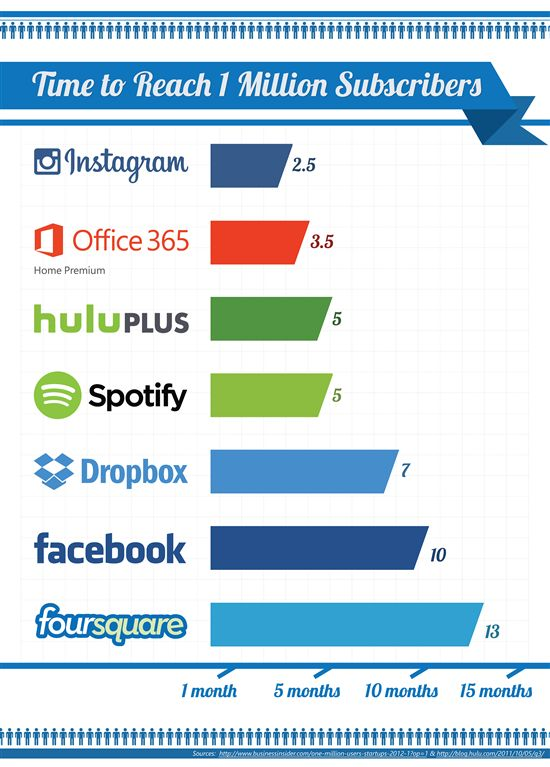
Do you use Gmail?  Google Apps? Office 365?  Microsoft's Office 365 subscription version is so popular with customers that it reached one million subscribers faster than many popular online services have, the company has claimed. Faster than Facebook!


What is the cloud? Where is the cloud? Are we in the cloud now? These are all questions you've probably heard or even asked yourself. The term "cloud computing" is everywhere. In the simplest terms, cloud computing means storing and accessing data and programs over the Internet instead of your computer's hard drive.


The cloud is now just a metaphor for the Internet. It goes back to the days of flowcharts and presentations that would represent the gigantic server-farm infrastructure of the Internet as nothing but a puffy, white cumulonimbus cloud, accepting connections and doling out information as it floats around in the sky.


The lines between local computing and cloud computing sometimes get very blurry. That's because the cloud is part of almost everything these days. You can easily have a local piece of software (for instance, Microsoft Office 365) that utilizes a form of cloud computing for storage (Microsoft OneDrive). Microsoft also offers a set of Web apps, now called Office Online, that are online-only versions of Word, Excel, PowerPoint, and OneNote accessed via your Web browser without installing anything. That makes them a version of cloud computing (Web-based = cloud).


Some examples of cloud computing you're probably already using:


Google Drive: This is a pure cloud computing service, with all the storage found online so it can work with the cloud apps: Google Docs, Google Sheets, and Google Slides. Drive is also available on more than just desktop computers; you can use it on tablets or on smartphones, and there are separate apps for Docs and Sheets, as well. Most of Google's services could be considered cloud computing: Gmail, Google Calendar, Google Maps, and so on.


Apple iCloud: Apple's cloud service is primarily used for online storage, backup, and synchronization of your mail, contacts, calendar, and more. All the data you need is available on your iOS, Mac OS, or Windows device (Windows users have to install the iCloud control panel). Apple won't be outdone by rivals: it offers cloud-based versions of its word processor (Pages), spreadsheet (Numbers), and presentations (Keynote) for use by any iCloud subscriber. iCloud is also the place iPhone users go to utilze the Find My iPhone feature that's all important when the phone goes missing.


Amazon Cloud Drive: Storage is mainly for music, preferably MP3s that you purchase from Amazon, and images. If you have Amazon Prime, you get unlimited image storage. The Cloud Drive also holds anything you buy for the Kindle. It's essentially storage for anything digital you'd buy from Amazon, baked into all its products and services. Hybrid services like Box, Dropbox, and SugarSync all say they work in the cloud because they store a synced version of your files online, but most also sync those files with local storage. 

Synchronization to allow all your devices to access the same data is a cornerstone of the cloud computing experience, even if you do access the file locally. It can be considered cloud computing if you have a community of people with separate devices that need the same data synched, be it for work collaboration projects or just to keep the family in sync.


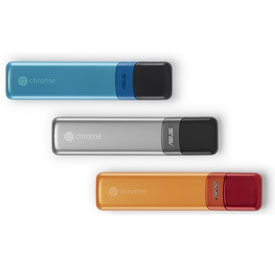
Cloud HardwareAsus Chromebit
Right now, the primary example of a device that is completely cloud-centric is the Chromebook. These are laptops that run the Chrome OS, which is essentially turning the Google Chrome Web browser into an operating system. With a Chromebook, most everything you do is online: apps, media, and storage are all in the cloud. Coming soon are Chrome Bits, smaller-than-a-candy-bar drives (pictured) that turn any display with an HDMI port into a usable computer running Chrome OS. You may be wondering what happens if you're somewhere without a connection and you need to access your data. This is currently one of the biggest complaints about Chrome OS, although its offline functionality is expanding.

Steve Wozniak


Arguments Against the Cloud

The ISPs, telcos, and media companies control your access. Putting your faith in the cloud means you're also putting your faith in continued, unfettered access. You might get this level of access, but it'll cost you. And it will continue to cost more and more as companies find ways to make you pay by doing things like metering your service: the more bandwidth you use, the more it costs. Maybe you trust those corporations.


There are plenty of other arguments against going into the cloud 100%. Apple co-founder Steve Wozniak decried cloud computing in 2012: "I think it's going to be horrendous. I think there are going to be a lot of horrible problems in the next five years," he said. When there are problems at a company like Amazon, which provides cloud storage services to companies like Netflix and Pinterest, it can take out all those services (as in the summer of 2012). Last year outages afflicted Dropbox, Gmail, Basecamp, Adobe, Evernote, iCloud, and Microsoft. Usually for just down for a few hours. But what if it was down for days? Or worse?


cloud1555x1235030614.jpg

Wozniak is also concerned about the intellectual property issues. Who owns the data you store online? You or the company storing it? Many times there has been controversy over the changing terms of service for companies like Facebook and Instagram regarding what they get to do with your photos. There's also a difference between data you upload, and data you create in the cloud itself; a provider could have a strong claim on the latter. Ownership is a relevant factor.

There's no central body governing use of the cloud for storage and services. The Institute of Electrical and Electronics Engineers (IEEE) is trying to create one. IEEE Cloud Computing Initiative in 2011 to establish standards for use, especially for the business sector. Last year's Supreme Court ruling against Aereo could have told us a lot about copyright issues in the cloud... but the court sidestepped the issue. For now.


Cloud computing—like so much about the Internet—is a little bit like the Wild West, where the rules are made up as you go, and you hope for the best. Ah yes, the Wild West. What would Gotham City be like without Batman? What we need - what all of us need - is a Super Hero. Yeah, that’s it. Someone we can count on to show us the way, to protect us, to guide us. Someone who will BE THERE for us, as we work, live and play “in the cloud”.


Coming in June…www.CaptainCumulus.com

captain.jpg