Sunday, December 26, 2021

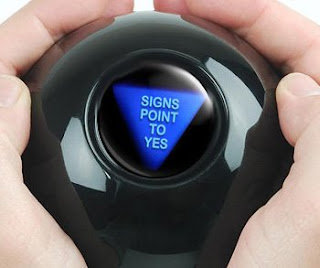
Magic 8 Ball says......

If you are reading on a smartphone, use landscape / hold phone sideways. 
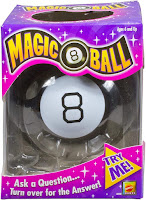
Remember the Magic 8 Ball? It was a special toy used for fortune telling process or seeking guidance manufactured by Mattel in the 1950s.

It had a 20 sided die - an icosahedron (geek much?) with 20 possible answers. 10 positive, 5 maybe, maybe not, and 5 negative. So, if you would shake it and "try again" the odds were that you would get a POSITIVE answer twice as often as a negative answer. 


Oh Magic 8 Ball: Will we go back to the office in 2022?

"Perhaps"

After many years of disruption, life in the USA is slowly returning to normal - except where it is not. Normal may never be normal again. The COVID-19 pandemic has fundamentally changed us, made us question our values and rethink what is important, not important, and what IMPORTANT even means. 

What is an office, anyway? And why do we seek to RETURN to it? In 2022 the way we work, the way we communicate, the way we prioritize our time will be different - and will CONTINUE to morph. In 2022 businesses of any size will need to adjust to meet the new demands of PEOPLE, and this will be directly connected to the way we all use and implement technology. 
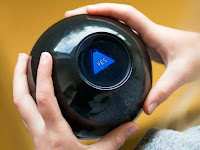
Oh Magic 8 Ball: Will we return to simpler times in 2022?

"YES"

COVID-19 forced us to slow down, which was one of the more positive outcomes. During lockdown, people did begin to appreciate the little things, to enjoy time spent with family, to connect with loved ones, and to appreciate not having to "rush" everywhere. And DOGS and CATS were the big winners during the pandemic, to be sure. 


Oh Magic 8 Ball: Will we return to the office, or to a college campus in 2022?

"Perhaps"

The desire for simplicity will extend to work, to school - to everywhere. The term "meetings" or "class" shall never be the same. Business will need technology that just works - every time. And, the people who DO go to an office will simply walk into a room, have their meeting, and get on with their day. Simple, easy to use, high-quality technology which allows people (workers or students) to connect seamlessly with co-workers, classmates and clients with zero fuss will be mandatory


Oh Magic 8 Ball: Will we still commute to work in 2022?

"NO"

There is a thing now called the 15 minute rule. During COVID-19 people realized what a total waste of time and money commuting to work was. They want to live within 15 minutes of the office - any office - if there even is an office to commute to. It has become widely accepted that we can be productive from anywhere. Workers who no longer wish to commute each day will demand that HYBRID working is a part of their default working arrangement. We shall see a rise in satellite offices, smaller offices located in suburban areas. As of this blog, Sears is converting their distressed mall properties into co-working places, low cost apartments, telemedicine centers, and business development zones. We hung out at "the mall" when we were kids. Now, we shall do it again, as fully-formed adults. Hanging out at the mall will become cool again. 

Business shall be conducted from anywhere and everywhere. Gartner believes that by the end of 2023, 40% of companies will use "operations anywhere" to combine virtual and physical interactions with customers and employees. 

Oh Magic 8 Ball: Should I Join the NYDLA (now NADLA) in 2022?

"YES"

In the past two years, we have witnessed the rise in telemedicine, the boom of eCommerce, the rise of digital banking, and just about every business type adopting decentralized work practices and processes as a result of the pandemic. Cloud technologies and services, combined with the update of 5G and ever faster internet speeds, will continue to drive the decentralized workforce. 2022 will enable productivity and business continuity from any (every) time zone. Early in the pandemic, we were all scrambling to get headsets, laptops, cameras, even desks and chairs. 2022 will be the year that we all DEMAND work quality via technology. Pro-quality sound, crystal clear video, super fast internet will be table stakes for work in the New Year. We are all now living, learning, working, playing - teaching, training, coaching, mentoring - in the global Cloud Economy. But there is no need to go it alone. There is a support group for the future. 


Oh Magic 8 Ball: Will VR take off in 2022?

"My sources say no"

Video is king, and it will continue to dominate as we all move into 2022. Virtual workspaces are coming, but not in the near future. Comfort is key for remote work, and wearing a VR headset that is not lightweight is a deal breaker. VR meetings will happen when the hardware can be designed in a way that is comfortable, lightweight, and easy to wear for hours on end. 


Oh Magic 8 Ball: Should I continue to write a Sunday Blog in 2022?

"Reply hazy try again"

[shake shake shake]

"Better not tell you now"

[shake shake shake]

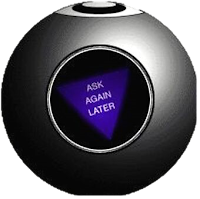
"Ask again later"

[shake shake shake]

"Cannot predict now"

[shake shake shake]

"Concentrate and ask again"

Will NYDLA.org save me time and money in 2022?


Sunday, December 19, 2021

I can't have another byte of pie

If you are reading on a smartphone, use landscape / hold phone sideways. 

A byte is a unit of digital information that most commonly consists of eight bits. Historically, the byte was the number of bits used to encode a single character of text in a computer and for this reason it is the smallest addressable unit of memory in many computer architectures. 

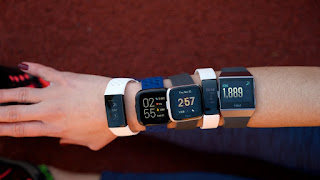
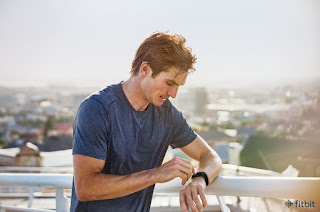
Ah, bytes and bits. FitbitGot it.

Fitbit is an American consumer electronics and fitness company. It produces wireless-enabled wearable technology, physical fitness monitors and activity trackers such as smartwatches, pedometers and monitors for heart rate, quality of sleep, and stairs climbed. Google bought Fitbit in 2021. 

The acquisition was scrutinized by regulators who were concerned over Google's access to personal data.

For some reason (too much time on my hands?) I went down the Fitbit Privacy Policy rabbit hole here: Fitbit.com/global/us/legal/privacy-policy and Fitbit.com/global/us/legal/privacy-policy.

Does anyone ever read this stuff? Like, other than 0.01% of the population? And, the real question is this: would there be anything in that legal stuff that would make anyone say "Hey! Wait a minute - no way!" 

I wear my Fitbit pretty much 24 x 7. The only time I take it off is in the shower and when I need to charge it up. Fitbit (Google) knows everything about me now. They know my sleep patterns, my physical location, activity, heart rate, food plan, even how much water I drink (not enough). And, Fitbit.com/friends now has me in a local dog walking club. And I also know when and where MY FITBIT FRIENDS are located, and what they are doing (or not doing). There is an AMAZING amount of stuff found here at Healthsolutions.fitbit.com/blog for those who want to find out what is possible

Folks, Google (and Facebook) knows everything. And - when you willingly "feed them" your personal data from things like Fitbit - well, that is over the top. When and where we are, what we are doing (dog park, shopping mall, office, home...) truly everything. Privacy is over. Especially when we willingly feed the machine. 

"OK, Google, what is pie?"  3.14159265359.....

"OK, Google, can I BUY pie in Boonton, NJ?"

[ OK, Tom: here is a list...of bakeries near Boonton, NJ.]  And now, on my personal Facebook page, up pops an ad for a local bakery in Boonton USA. Just like that, the wizards of both Google AND Facebook know that THIS Fitbit user is shopping for... pie

As of this blog, COVID-19 is, well, back. Was it ever gone? Around 30% of the US population has NOT been vaccinated. That number is not moving. There is a very interesting post about COVID-19 and Fitbit here: Blog.fitbit.com/early-findings-covid-19-study. It talks about how Fitbit devices can identify signs of COVID-19 at its earliest stages. As of today, NHL and NFL teams are not playing scheduled games due to COVID-19. 

Cardio, Strength Training, Walking, Running, Yoga, Recipes, Health Eating Strategies, Snaking Tips, Smart Food Shopping, Stress, Mindfulness, Sleep Tips...and where to buy pie. These are all available to me, and for anyone who wants to know about me

The privacy train has left the station long ago. You can Google Health Insurance Portability and Accountability Act (HIPAA) all you want. Do you know who is NOT required to follow HIPAA? Life Insurers, Employers, Worker's Compensation Carriers, most schools and school districts, many state agencies, including child protective agencies, most law enforcement agencies, and many municipal offices. 

Saturday Night Live was (not) live-live "from New York" last night due to COVID-19 surging in New York City. At this point in the game, why not GO ALL IN on using technology to FIGHT COVID-19 with everything we got? 

Why not have my Fitbit "buzz" when I am in a COVID-19 hotspot? Why not have my Fitbit alert me when there is a "hint" of my having COVID-19 symptoms? Why not have my Fitbit talk to my primary care physician in real-time, 24x7? If my Fitbit can organize my Dog Park Walking Club, just imagine what it can do for a KICK COVID IN THE ASS Club? 

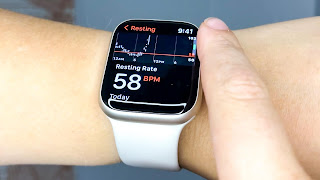
I see 2.9M+ people today on the Facebook.com/fitbit page. I am sure the numbers are MUCH HIGHER on the Apple Watch pages. 

"OK, Google, how many people wear an Apple Watch?" 100M+

Privacy is a joke. Deep in our hearts, we know that Google, Facebook and Apple (and Amazon, and Netflix, and...) already know EVERYTHING about us - especially when we willingly SEND THEM our most personal data. Might as well put Big Tech to work saving lives, full guns, all in, right? 

Hey Big Tech: want to help your brand? KICK COVID'S ASS! For all of us. Thanks. 


Sunday, December 12, 2021

Everyone Listen Up!!!

If you are reading on a smartphone, use landscape / hold phone sideways. 

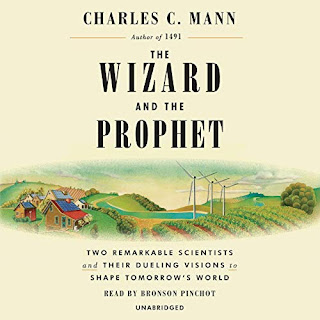
On December 10th, Seth's Blog declared this as his Book of the Year. I always find it cool how you can just say "Seth" and you know who I am talking about. If you simply type "Seth" into Google, he comes up first. Anyway, Seth says:
"The Wizard and the Prophet (book) delivers on so many things that we want a book to do - it could never be replicated by a website or even a film. The audiobook is even better - it's engaging, powerful and resonates really deeply."

Seth Godin said the audiobook is even better. Let that sink in.

There has been the debate of reading vs. audiobooks for years. For a 2016 study, Beth Rogowsky, an associate professor of education put her assumptions to the test. One group listened to Unbroken, a nonfiction book about World War II (by Laura Hillenbrand) while a second group read the same. A third group read AND listened at the same time. Afterward, everyone took a quiz designed to measure how well they had absorbed the material. "We found no significant differences in comprehension between reading, listening, or reading AND listening simultaneously," Rogowsky says. 

Personally, I love listening to audiobooks. And, when "read by the author" it is even better. It feels like a Master Class, with the author right there in the room (or in the car, or in the park) with me

Audiobooks have some strengths. Humans have been sharing information orally for tens of thousands of years, while the written word is a much more recent invention. When we are reading we are using parts of the brain that evolved for other purposes. We are making our brains do something that our brains were not really made to do - the cognitive task of reading is not normal. Listeners however, can derive a lot of information from a speaker's inflections, or intonations. Sarcasm is much more easily communicated via audio than printed text. People who hear Shakespeare spoken out loud tend to glean much more meaning from the actor's delivery, for example.

NYDLA.org was always all about distance learning, morphing into DIGITAL learning, and today it is really just DIGITAL LIVING. From TED talks to audio/video podcasts, to Zoom becoming a verb, technology based learning systems (TBLS) are now in every part of our lives. I always felt that Audiobooks were front and center in the distance (digital) learning world. 

And so, I have downloaded The Wizard and the Prophet from Audible. 

Brevity is bliss: Seth was right. 


Sunday, December 5, 2021

Our Client's Customer's Membership End-User Subscription Fees

If you are reading on a smartphone, use landscape / hold phone sideways. 

Do you have clients or customers? And do you know (or care) about the difference?

Simply put, a client is the one who wants professional support or services from the company. Whereas, a customer refers to a person who purchases products or services from the company. Most of the time, clients commit to a longer business relationship, which may or may not end after the first purchase. 

Zoom became "a verb" long before COVID-19 changed the world forever. Last estimate, there are 1B+ people using Zoom for free - which costs Zoom Video Communications, Inc. around $100M+ per year, just to keep the free service, free. And yet, there are enough people in the world to make Zoom around $2.7B in 2021. So, even with giving Zoom away for FREE to over a billion people, Zoom had a net income of around $340M+ for the Q3 2021. 

Way back in 2014: "The Consumer Product Zoom - Zoom's HD video and screen sharing platform has an unprecedented ability to produce and stream a distinctively crisp image and a very clear audio transmission throughout your conversation, regardless of your bandwidth situation." 

Customers. Clients. Members. Users. Subscribers. 

I am old enough to remember paying AOL by the HOUR for their service. Then - AOL went to a flat monthly fee. Then - AOL became FREE. Today, from time to time, I still see people using an AOL email, like JohnSmith@aol.com. For me, that just makes me snicker, and I think to myself like DUDE! Get a Gmail, you look like a luddite with that AOL email.

BACK IN THE DAY: I remember paying around $0.50 per minute for my NYNEX cellular phone service - plus a monthly fee. It did not take much to have a $200+ monthly car phone bill. Today, you can get an "all you can" eat plan from most carriers for $15 per month. So back in the 1980's if you had a phone installed in your car you were in business (in some capacity) or very wealthy. What did you do for a living that you NEEDED to make phone calls from the car for around $0.50 per minute, plus taxes and fees? 

Peloton. Disney+. Netflix. Amazon Prime. Salesforce. NetSuite. QuickBooks. Workplace from Meta. Facebook from Meta. So ask yourself: the monthly cellular phone service that you are getting from ONE of the Big Three Wireless Carriers - are you a customer, a client, a member or a user - or a subscriber? 

With roughly 2.89B monthly active users, Facebook (from Meta) is the biggest social network worldwide. But Workplace (from Meta) has around 7M+ users worldwide. Facebook is free, Workplace is not free. Companies pay to have access to Workplace. But both have users. Not clients or customers or members, but they call them users

Twitter. LinkedIn. Uber. Airbnb. The Harvard Club. Your (local) country club. If you are reading this blog (and, you are - if you got this far) are you a subscriber of my blog, or is this a one-time thing? And do you have a favorite podcast

Zoom has 1B+ users world wide, but only a fraction of those users pay for Zoom. And yet, things are very good over at Zoom Video Communications, Inc. The community that I run NYDLA (and now NADLA) shall have 10M+ members come 2022 - mostly thanks to (sadly) the global pandemic. Other than Zoom, I don't know who could have grown more (or faster) during a global pandemic, as we pivoted from distance learning to DIGITAL learning to DIGITAL LIVING. And trust me (like Zoom) only a fraction of our membership pays. Otherwise I would be writing this blog from the beach in Fiji.

So, what do you have in YOUR business, in YOUR company? Customers? Clients? Members? Users? Subscribers?

Yes. The answer is yes, all of the above.

You have Customers, Clients, Members, Users AND Subscribers. It just depends on the day (or the year) you ask the question. 


Robbie is also the host of the podcast
"Subscription Stories: True Tales from the Trenches" She coined the popular business term “Membership Economy"
which is now being used by organizations and journalists
around the country and beyond.


Sunday, November 28, 2021

I saw what you did there

If you are reading on a smartphone, use landscape / hold phone sideways. 

Q:  When is a business not a business?  

A: When it is a Christmas Tree Farm

A few hours earlier today, we were with the kids in Madison, Connecticut. We were heading home from Thanksgiving Weekend. Last minute, we decided to tag along with Tommy and Danielle to get their Christmas Tree. First Christmas in their new home! 

I was in charge of Konta our dog, so I was also in charge of photography. And I guess videography, if we want to get technical. Here is what struck me - but not until our ride home to New Jersey.

  • Trees are all $60 regardless of size, shape, or condition.
  • You are Paul Bunyan. They hand you a saw, and wish you good luck.
  • You pick the tree, you cut the tree, you haul the tree to your car.
It truly did not hit me until our 2+ hour drive home. Is this a business, or is this something else? And what other business - seasonal or otherwise - operates under such a model? 
  • The more you sell - the worse the quality of the product. (The good ones go fast).
  • The customer is always right - and - the customer is also always wrong.
  • There is a short window of opportunity - Christmas Trees are hard to sell on December 26th.
Hey Google: How long does it take to grow a Christmas Tree big enough to harvest? 

Hey Tom: Most tree varieties are ready to harvest at the popular height of 5 to 7 feet in around eight years. 

Damn, sounds like a terrible business. Except of course, when it is NOT a terrible business. 

Turns out that Christmas Trees are a very profitable cash crop for a small acreage farm. They are low maintenance, ideal for a spare time project, and can produce a good income for years to come. According to the American Christmas Tree Association (this is a thing) the average price of a Christmas Tree at a U-Cut lot was $74 in 2020. With 200 ready to harvest trees per acre, that is $14,800 of pretty close to net profit. 


And the market for live Christmas Trees is growing, as the buying public is turning it's back on plastic artificial trees in favor of the "real thing."  And, in addition to making a good income, Christmas Tree Farmers provide erosion control, wildlife habitat and improve the environment.  

So, I stand corrected. Ninety-Four Million U.S. Households will celebrate the holidays with AT LEAST ONE REAL Christmas Tree this year. And at the bargain price of $60 that would be $5.6B+ in sales - all very high in net profit. And all in around 30 days of active selling. Yeah, selling - I mean 30 days of  standing there, handing out a saw, and collecting the cash. And saying "See you next year!" 

Ho-Ho-Ho, now I want Garden Hoe for Christmas. 


Sunday, November 21, 2021

Hell Yeah!

If you are reading on a smartphone, use landscape / hold phone sideways. 

The Great Resignation has been in full swing for some time now. It is an informal name for the widespread trend of a significant number of workers leaving their jobs during the COVID-19 pandemic. It is sometimes called the Big Quit. Personally, I think the better name would be the Big Reset or the Big Rethink.

Reports of the Big Quit may have been exaggerated.

Over the past several months, a rapidly growing number of Americans left their jobs - more than 4.4 million in September. During that time, most of the narrative has been focused on burned-out employees stomping out of their jobs in which many workers are demanding higher wages, better working conditions and more mobility. 

It's complicated. 

Long before COVID, my buddy Derek Sivers wrote the book "Hell Yeah or No." As he tells it, at one point he sold his company, and because he signed a non-compete agreement, he was prevented from doing the one thing that he loved doing for most of his adult life. So, now what?  His book Hell Yeah or No is all about his thoughts about what's worth doing, fixing faulty thinking, and making things happen. Here is the link from 2018 where he says if you're not feeling "Hell Yeah!" then say no. 

Derek has another book "Anything You Want" and it was written for exactly the times we are now living. Get his books. Read his books. Even better, listen to them. It is like he is in the room with you - it is like a Master Class for life.

Which of course, brings me to Occam's RazorWhy, of course, right?

Occam's razor, also known as the principle of parsimony or the law of parsimony is the problem-solving principle that "entities should not be multiplied beyond necessity", sometimes inaccurately paraphrased as "the simplest explanation is usually the best one." You know, the "If it walks like a duck and quacks like a duck, it is probably a duck - and not an eagle" logic. 

And, of course, we all know that Hickam's Dictum is the opposite of Occam's Razor. In a complex system, problems usually have more than one cause. For example, in medicine, it is possible that people have more than one disease or medical problem at the same time. It would really suck to get an X-Ray for a broken bone from let's say a car accident, and then ALSO find out that you have cancer

Or - did that car accident just save your life?  Did that X-Ray for the broken bone just allow you to catch the cancer early enough, so that it is treatable with a strong probability of a full recovery? 

OK, land the plane, Tom.......

COVID made the world rethink - everything. Our jobs, our careers, our lives. Quality of life. COVID made us think about what is really important. Issues of family, priorities, personal self-worth and fulfillment. I think that the cause of The Great Resignation is more Hickam's Dictum than Occam's Razor. It's complicated. 

COVID made ALL OF US to see that life is so very short - and time is the coin of the realm. Did COVID, even though tragic and terrible, give us something good - something positive? Like the unscheduled broken bone X-Ray that caught the cancer in time? And why does it take something as terrible as a global pandemic to make us stop, pause, and reflect on what we are doing with our life, what we are doing with our time, and our careers?

Happiness is what you feel along that long and tedious path towards your goals. Fulfillment is the feeling of hard work and dedication, leading you up to your destination. Happiness is enjoying those moments during the journey that help you create the best memories possible. 

Should you listen to Derek's books?  

Hell Yeah. 


Sunday, November 14, 2021

My Inflated Ego

If you are reading on a smartphone, use landscape / hold phone sideways. 

What do you call someone who has an inflated ego? Don't you dare say Tom Capone...

Someone who is egotistical is full of themselves, completely self-absorbed. The prefix ego refers to a person's sense of self, or self-importance. To be egotistical is to have an inflated view of self-importance - basically to think you are better than everyone else. 

None of this sounds good. None of this is attractive, or compelling, or a very good strategy for winning friends and influencing people. Unless, of course, you are running for President in 2016. But I digress. 

Inflation. Runaway inflation. Or, the big one - Hyperinflation - rapid, excessive, and out of control general price increases in an economy. While inflation is a measure of the pace of rising prices for goods and services, hyperinflation is rapidly rising inflation, typically measuring more than 50% per month. This also - does not sound good. Or, can inflation be a good thing, sometimes? 

I am NOT an economist. Not even close. But I have been in business since 1983. And, I got my drivers license in the 70's during the gas crisis. I am like that Insurance TV commercial: "I know a thing or two because I've seen a thing or two...."

Today, prices for everything from gasoline to groceries are surging as the economy roars back from the pandemic recession. And that is raising concerns about whether the USA is headed back to the awful economic days of the 1970's, when the country was gripped by double-digit inflation that required painful action by the Federal Reserve. 

I came of age in the 1970's and I remember what that terrible period was like. Today, I feel that the current run-up in prices is a temporary phenomenon, sparked by supply shocks tied to the pandemic, and pent-up demand from consumers - not the beginning of a persistent, upward spiral like the one that spawned "stagflation" in the 70's. 

We lived it. It was not that long ago. The BEST thing that anyone can do, is to do a little personal research on exactly what inflation is - and what it is not. By 1983, inflation had retreated back to just over 3%. 

But it was a painful correction, taking many years. Nearly 4 million people lost jobs in back-to-back recessions in the early 1980's. But for the last four decades, inflation has not been a serious problem in the U.S. 

The generation that were adults in that high-inflation period will always remember it. But there are a lot of Americans that never lived with inflation at all. So naturally, they don't expect it - and they certainly don't understand it. 

If you want to fill your brain with some easy to understand inflation stuff, click here

In 1970 the cost of a cup of coffee was $0.25. 1980, $0.45. 1990, $0.75. 2000, $1.00. $2010, $1.25.  $2020, $1.75. Now hot water is hot water, so - did coffee beans really change that much over time? Now - what is the cost of a cup of coffee when YOU make it in YOUR OWN KITCHEN, and fill a thermos to take the coffee WITH YOU to work? Or - do you work at home - so no need to buy coffee at all? See, you have more control than you think you do. 

Inflation is powered by choices - the choices that we (all) make. You, me, all of us - we have way more control over inflation that we think we do

How we buy, what we buy, and when we buy it - is what makes inflation - or even deflation! It's a dance, folks. Inflation occurs when the process of goods and services rise, while deflation occurs when those prices decrease. Moderate inflation is good because it increases national output, employment and income. Whereas deflation reduces national income and brings the economy backward to a state of depression. 

Inflation, like most things in life, has two sides to the same coin. Everything in moderation, right? Just like ego. A healthy ego, vs. a narcissistic ego. Since you got to have an ego, you might as well have a healthy one. 

"Everything in moderation, including moderation." ~ Oscar Wilde.