Sunday, March 31, 2024
Messenger of Joy! (and hidden Easter Eggs)
Sunday, March 24, 2024
Leaving on a Jet Plane
If you are reading on a smartphone, use landscape / hold phone sideways.
John Denver wrote and recorded “Leaving on a Jet Plane” in 1966, when he was just 23 years old.
Denver, then a relatively unknown 23 year old musician in the Los Angeles folk scene, wrote the song during a layover at Washington National Airport in 1966. In one of his BBC Radio specials, Denver said about the song:
"This is a very personal and very special song for me. It doesn’t conjure up Boeing 707s or 747s for me as much as it does the simple scenes of leaving. Bags packed and standing by the front door, taxi pulling up in the early morning hours, the sound of a door closing behind you, and the thought of leaving someone that you care for very much."
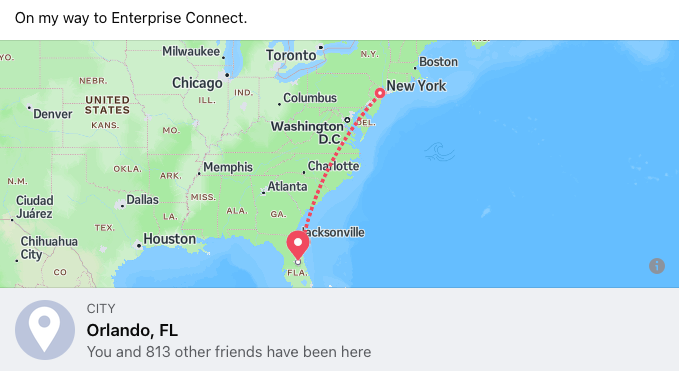
This week is Enterprise Connect. March 25-28, 2024. For over 30 years, Enterprise Connect has been the leading conference and exhibition for enterprise communications and collaboration in North America. Enterprise Connect brings corporate IT decision makers together with the industry's vendors, channel partners, analysts and consultants to focus on the issues central to enterprise communications and collaboration. Translation: it's a big deal. Looks like 5,500+ have registered to be LIVE in Orlando.
And this week is Adobe Summit 2024. March 26-28, 2024. Adobe Summit is an annual conference organized by Adobe Systems, a multinational software company known for its creative, marketing, and document management solutions. Adobe Summit typically focuses on digital marketing, advertising, e-commerce, customer experience management, and related topics. The event gathers industry professionals, marketing leaders, technologists, and digital enthusiasts to discuss emerging trends, share best practices, and learn about Adobe's latest technologies and innovations in the digital experience space. Adobe Summit often features keynote presentations, educational sessions, workshops, networking opportunities, and product demonstrations. It serves as a platform for attendees to gain insights, collaborate with peers, and explore strategies for driving digital transformation and business growth. Translation: it's a big deal. Looks like 6,000+ have registered to be LIVE in Las Vegas (sold out). Attendance for the Adobe Summit Online experience is unlimited - and free for everyone.Because I am not Travis Kelce, I cannot borrow Taylor Swift's jet plane. So, TAC Sr. will go to Orlando, and TAC Jr. will go to Las Vegas. And, TAC Sr. will also attend Adobe Summit Online, for free, from Orlando. Done.
But what really hit me this morning is how Online is free and unlimited, and attending LIVE is not free, attendance is limited and expensive (travel, hotel, event pass). Adobe Summit sold out fast - the conference rooms only hold so many people. Same goes for Enterprise Connect. The Gaylord Palms Resort in Orlando has around 1,700 guest rooms, not 17,000.As I write this Sunday Blog I reflect on these two events. Adobe Summit is all about experience-led growth. Digital Experiences. They give you a template letter to send to your Boss, to convince them to pay for your trip to Las Vegas (LIVE):
To: D. Bigboss
From: Bigboss N. Training
Subject: Attending Adobe Summit LIVE in Las Vegas
Dear [insert supervisor’s name],
As our focus on delivering personal and meaningful experiences to customers continues to grow, I want to prepare myself as best as I can to create the future of experience-led growth for our business. I’m writing to ask your approval to attend Adobe Summit, the premier digital experience conference, in Las Vegas from March 26—28, 2024.
Adobe Summit is a conference designed for the leaders and creators behind the world’s best experiences. Summit offers unparalleled opportunities for growth and development, including exclusive skill-building sessions, trainings and credential exams, and networking events with experts and leaders in digital experience.
Here are ways our company would benefit from my attendance:
• Insight into all things customer experience: I’ll gain valuable skills for keeping customers engaged and driving brand loyalty and growth.
• Staying ahead of upcoming trends: During the keynotes, sessions, and customer success stories, I’ll find out what’s new and next from industry leaders who are creating breakthrough customer experiences.
• Making the most of our Adobe investment — With more than 200 sessions and labs, I’ll learn time-saving techniques and best practices.
• Brainstorming with the best of the best — I’ll have the opportunity to connect directly with peers and leaders from the world’s top brands and collect ideas for our next great customer experiences.
• Exploring the full customer experience ecosystem — In the Community Pavilion, I’ll have opportunities to talk with Adobe partners about their newest products and services that support experience-driven companies and expand the capabilities of our current tech stack.
After Summit, I’ll submit a post-conference report with key learnings and takeaways so I can share everything I absorbed at Summit with other members of the team and the larger organization.
You can learn more about Summit at summit.adobe.com.
Me, TomCapone.com - I am very spoiled. I run the Distance Learning Association, and we are all about "remote" and technology and virtual experiences. Digital Experiences. Adobe is all about digital experiences. Enterprise Connect is all about well, connecting the Enterprise (the people) via technology. The Titanium Sponsors at EC'24 are AWS, RingCentral, Webex and Zoom.
The reason that I am very spoiled is that I live in North New Jersey, around 28 miles West of NYC - you know - the Center of the Known Universe. So, at the drop of a hat, I can be in THE BIG APPLE in less than an hour, and attend events at places like Javits Center with almost no planning. And certainly no airports are involved. If I wait long enough, sooner or later, THE WORLD comes to me, in NYC. Round trip on the bus, BOONTON USA < > Times Square, less than $20. And 5G and/or WiFi the entire time.
But now, this week, money will be spent. Time will be invested in traveling to Orlando, and to Las Vegas. Because even with the best technology in the world - people still want to do business with people. Live. In person. Humans want to work with other humans, not robots. Not yet, anyway. People still want to meet people live, over adult beverages.
My son Tommy will be hanging with Shaq. In Vegas. You cannot do that online.
And now I have that John Denver song in my head like an earworm... and so do you.
Sunday, March 17, 2024
Where to sit?
Hey ChatGPT: Where should I sit at the Snowflake Data for Breakfast in NYC?
Hey Tom! Sitting in the front row offers several advantages:
Better Engagement: When you're in the front row, you're closer to the action. This proximity can help you stay more engaged with the material being presented, whether it's a lecture, a performance, or a meeting.
Clearer View: Being in the front row ensures that you have an unobstructed view of the speaker or presenter. You won't have to strain your neck or squint to see what's happening, which can help reduce eyestrain and improve comprehension.
Reduced Distractions: Sitting in the front row can help minimize distractions from other attendees. You're less likely to be distracted by side conversations, movements, or other disruptions that may occur further back in the room.
Increased Interaction: Being close to the front makes it easier to interact with the speaker or presenter. You may feel more comfortable asking questions, participating in discussions, or seeking clarification on points that aren't clear.
Positive Impression: Sitting in the front row can convey a sense of attentiveness and eagerness to learn or engage with the topic at hand. This can be particularly important in professional or academic settings where perception matters.
Of course, whether sitting in the front row is the best option for you depends on your personal preferences and the specific context of the situation. However, it's worth considering the potential benefits of front-row seating when deciding where to position yourself.I did. I always sit in the front row. Front row, center. Funny how that spot is usually available. Sometimes people sit in the last row, like any further back they would be outside. But I find it interesting that the front row, especially front row center usually goes begging.
Not at a concert. Not at a Broadway Show, not at a sporting event. Courtside seats at an NBA game? What does THAT cost? No, those seats are the MOST expensive. Those seats are in high demand. But at a lecture, in a classroom setting, those front row center seats are probably without takers. Think about that.
During the Q&A when they are passing the microphone around the room, it is interesting to notice who has a question. Who actually has something meaningful to ASK, vs. someone who just wants to hear themselves talk. It's pretty obvious.Front row, center. Any closer, I'd be on stage. Ah, yes, Q&A, it's my turn with the microphone.
"Hello, my name is Tom Capone, and I run the Distance Learning Association. This question is for Peter, and then - same question for the rest of the panel. Peter: I see on your slide that you majored in ENGLISH in college, and now you are a Data Scientist. How did that happen, and if everyone on the panel can briefly tell us your own personal journey to find you here - today - on the stage at the Snowflake Data Summit."
You can see the body language of the folks on the stage change. You can see Peter's face light up as he told his story of English Major turned Business Analytics Information Technology (BAIT) expert. And then, each person on the dias told their own personal career story.
Yes, the Data for Breakfast Summit, the event that was all about Big Data, Analytics, AI, Technology, quickly went back to being about people. Ah yes, people eat breakfast, robots do not. Right.
I tend to be a visionary optimist. I like to think Luke Skywalker PLUS R2-D2. A team. That is the world I hope we have.
Peter and the Robots. Sounds like a good name for a band.
Oh, yeah, also this: Snowflake is now a value-added member benefit of the Distance Learning Association. You are welcome.
Sunday, March 10, 2024
That's not my job!
TomCapone.com here - hey ChatGPT: what's a job?
ChatGPT: Hey TomCapone.com: A job is a regular activity performed in exchange for payment, typically as part of one's livelihood. It is often associated with specific tasks, responsibilities, and a set of duties performed within an organization or for an employer. Jobs can range from manual labor to highly specialized professions, and they can be full-time, part-time, temporary, or contract-based. The primary purpose of a job is to provide individuals with income and financial stability, as well as opportunities for personal and professional development.
Hey ChatGPT: come again?
ChatGPT: Ah, TomCapone.com, please pay attention this time: A job typically refers to a specific task or set of tasks performed by an individual in exchange for monetary compensation or other benefits. It can also refer to a position within an organization or a profession that requires specific skills, knowledge, and responsibilities. Jobs vary widely across industries and sectors, ranging from manual labor to highly specialized roles in fields such as technology, healthcare, finance, education, and more. The concept of a job forms the backbone of most economies, as individuals engage in employment to earn a living and contribute to society.
Hey ChatGPT, I think I got it now: A "job" is a regular activity performed in exchange for payment or compensation. It typically involves specific tasks, responsibilities, and duties that contribute to the functioning of an organization or business. Jobs are often part of a larger career path and may require certain skills, qualifications, or experience. They can vary widely in nature, ranging from manual labor to professional roles in fields such as medicine, engineering, education, finance, and many others. Jobs provide individuals with a means to earn a living, support themselves and their families, and contribute to society. Do I have it right?
ChatGPT: did you Google that?
Ah so, part of my "job" is to write a Sunday Blog. Like this one. And to post stuff on social media. Which is how you probably found this blog. And to interview people for video podcasts, and attend industry events. Like our www.CoffeeInTheClouds.us interviews which reach (checks notes...) MILLIONS of people. Did I just sound like Dr. Evil? Well, now I did, right?
I have been getting the ExecuNet email newsletter since 1988. It's good. In fact, it is very good. If someone is looking for a job, I highly recommend them. If you are looking for a job - as in getting a paycheck, then using services like ExecuNet should help you to reach your objective. Today, in 2024, there are many "job boards" out there, Indeed and LinkedIn and ZipRecruiter come to mind. Also in 2024, there are many sites like Freelancer, People Per Hour, Fiverr, etc. that service "the gig economy" or independent contractors. I predict that many people who are reading this blog today have active profiles on such platforms. Here we go again: Hey ChatGPT: what is Fiverr?Sunday, March 3, 2024
Zoom me out to the ball game
TomCapone.com: hey ChatGPT: What is the population around the 30 Major League Baseball parks?
ChatGTP: I'm sorry, but I don't have access to real-time data, so I can't provide the exact populations around each of the 30 Major League Baseball parks. The populations around these parks would vary depending on their locations and the cities they're in. You can find the populations of the cities where the parks are located through various sources such as census data or official city statistics websites.
TomCapone.com: OK, What are the 30 MLB ballparks?
ChatGPT: As of my last update in January 2022, there are 30 Major League Baseball (MLB) stadiums. Here they are:
1. Angel Stadium of Anaheim (Los Angeles Angels)
2. Chase Field (Arizona Diamondbacks)
3. Truist Park (Atlanta Braves)
4. Oriole Park at Camden Yards (Baltimore Orioles)
5. Fenway Park (Boston Red Sox)
6. Wrigley Field (Chicago Cubs)
7. Guaranteed Rate Field (Chicago White Sox)
8. Great American Ball Park (Cincinnati Reds)
9. Progressive Field (Cleveland Guardians)
10. Coors Field (Colorado Rockies)
11. Comerica Park (Detroit Tigers)
12. Minute Maid Park (Houston Astros)
13. Kauffman Stadium (Kansas City Royals)
14. Angel Stadium of Anaheim (Los Angeles Angels)
15. Dodger Stadium (Los Angeles Dodgers)
16. loanDepot Park (Miami Marlins)
17. American Family Field (Milwaukee Brewers)
18. Target Field (Minnesota Twins)
19. Citi Field (New York Mets)
20. Yankee Stadium (New York Yankees)
21. Oakland Coliseum (Oakland Athletics)
22. Citizens Bank Park (Philadelphia Phillies)
23. PNC Park (Pittsburgh Pirates)
24. Petco Park (San Diego Padres)
25. Oracle Park (San Francisco Giants)
26. T-Mobile Park (Seattle Mariners)
27. Busch Stadium (St. Louis Cardinals)
28. Tropicana Field (Tampa Bay Rays)
29. Globe Life Field (Texas Rangers)
30. Rogers Centre (Toronto Blue Jays)
Please note that there might have been changes since then due to new stadium constructions, renovations, or changes in team locations.
TomCapone.com: OK, last question: What would happen if the DLA (Distance Learning Association) hosted events for the six months of the MLB 2024 season at all 30 MLB ballparks. What if we invited (checks notes...) all of the 'ideal client persona' (filtered) businesses within easy commute of the 30 MLB ballparks, to VIP events, customer appreciate days, Lunch 'n Learns, Sunset Seminars, to learn about products, services, etc. Things like Cybersecurity Summits, UCaaS days, Ecommerce Mastery, Telemedicine....Cloud Computing... AI Mastery... anything...everything. And since the MLB is Powered By Zoom all such individual events can also reach hundreds of thousands of people. Over the entire season, we would reach MILLIONS of business decision makers, both LIVE and (live via Zoom). We could even have Baseball Hall of Fame players attend the events LIVE in the VIP suites or (live) via Zoom. What do you think?
ChatGPT: ..................calculating....................................................
{ ah, but first JoinNYDLA.org }
Sunday, February 25, 2024
Well, use the difficulty
Yesterday: DDoS attack from outside the USA. Not just a DDoS, a brute force attack.
A brute force DDoS (Distributed Denial of Service) attack is a type of cyberattack where multiple compromised systems are used to flood a target system or network with an overwhelming volume of traffic, aiming to make the targeted system or network unavailable to its intended users.
In a brute force DDoS attack, attackers typically utilize a large number of bots or compromised computers to generate and send a massive amount of traffic to the target. This flood of traffic can overwhelm the target's resources such as bandwidth, processing power, or network connections, thereby causing the target system or network to become unresponsive or inaccessible to legitimate users.
The term "brute force" in this context refers to the indiscriminate and forceful nature of the attack, as it does not rely on sophisticated techniques to exploit vulnerabilities in the target system or network. Instead, the attackers simply bombard the target with an excessive amount of traffic, often using techniques like UDP flood, SYN flood, or HTTP flood.
Brute force DDoS attacks can have serious consequences, causing financial losses, reputational damage, and disrupting services for legitimate users. It's important for organizations to implement robust DDoS protection measures to mitigate the risk of such attacks.
So, at around 6:00 AM EST on a Saturday morning, no one can reach our websites - or they load SLOW. Like so slow that it looks like we are out of business.Now, I have been selling telecom and technology since 1983. I know some stuff, but I am not an IT / MIS / Engineer. I'm a selling CEO...
And so at 6:04 AM EST on a Saturday morning I am opening up a support ticket with our vendor (normally I would not be the one doing this...). And now I am speaking LIVE with support. A real person. Not a bot, not a chatbot. No, I am working with a real human, Robert, in tech support. LIVE.
The next 20 minutes or so, it was Robert and me, me and Robert - shoulder to shoulder - fighting off the attack. Looking at this, trying that. Rebooting the server, etc. Once the CASE was closed, Robert sent me an email to memorialize it all:
"Thank you for calling in. During the call you mentioned that you were have issues connecting to your websites. You provided access to your server and I immediately noticed that you had 63,011 failed login attempts in only a few minutes. I then checked your messages in the /var/logs directory. There, I found you had an IP, 115.204.XX.XX, that was brute forcing your server. I added that IP to the blacklist for cphulk and then rebooted your server. This significantly improved your website load times.
As requested over the call this case can be closed out. We will set this case to resolved but if you have any questions or if we can be of any additional assistance a reply within seven days will open it back up."
So, it turns out that a COMPETITOR of the vendor that just awarded us North America was the bad actor. We were able to trace the IP address, and identify them. And, we have since alerted the authorities. Or shall we say, Robert did all of this. For me. For us. Within the hours of the incident, I went through a range of emotions. And then, I remembered something that I learned from Michael Caine, the actor. He would say "use the difficulty."Sir Michael tells us that any time we are faced with a difficulty or problem, we can use it to our advantage. He uses the story of a misplaced chair in his rehearsal space to illustrate this, doing so with his typical wit and self-deprecating humour. It’s complete mindset brilliance.
Here’s an excerpt where he illustrates the moment of his epiphany (the video is at the bottom):
“I opened the door, and I said to the producer who was sitting out in the stalls, ‘Well look, I can’t get in. There’s a chair in my way.’
He said, ‘Well, use the difficulty.’
So I said, ‘What do you mean, use the difficulty?’
He said, ‘Well, if it’s a drama, pick it up and smash it. If it’s a comedy, fall over it.’
This was a line for me for life: Always use the difficulty.”
Sir Michael goes on to say there’s never anything so bad where ‘using the difficulty’ can’t be applied. If we use it only a quarter of one percent to our advantage, then we’re ahead. We didn’t let it get us down.
Brush yourself off, pick yourself up, give yourself a metaphorical hug and ask yourself questions. In doing so, you’ll put into practice this “Use the Difficulty” mindset:
- What’s this situation teaching me?
- What’s the useful lesson that I can glean from this scenario?
- If this was happening to a good friend of mine right now (instead of me), what advice would I give to him or her? This can provide some perspective to a situation that you might be too close to. Take a step back and have a look from the outside-in.
- How can I use this perceived disadvantage, set back or challenge to my advantage?
- What’s good about this situation? Come up with at least five things.
- What can I do right now to move forward?
Although Sir Michael jokes his other philosophy is to avoid difficulties altogether, leaders are often faced with challenges on a daily basis. ‘Using the difficulty’ is a change in mindset that can turn a challenging situation into a positive experience for everyone.
I have been thinking about the AMAZING customer service that I received from super genius support engineer Robert yesterday. How we went from a very (very) bad situation to resolution - and how now, today, I am using the difficulty. We are a better company and organization now for experiencing this DDoS attack. We learned much, not only for how to protect ourselves moving forward - but how to protect our customers, our clients, our members.
I am now 'using the difficulty' for everyone we know - for every single member of the DLA.
Sunday, February 18, 2024
R2-D2 send an email to the CES Attendee List
One of the last major events that I attended LIVE before COVID was the AI Summit in NYC.
Here is my December 2019 BLOG on that show. And that blog in 2019 turned out to be my most read blog post, ever. The folks who ran the show, reposted it on their website for all to see. Cool.
In my blog I joked about how my 'Baby Boomer Brain' saw I Heart a Rotary Telephone in the T-Shirts that IBM was giving out at their booth.
My friend Seth Godin, the legendary luminary in branding and marketing recently said "AI is the biggest thing in our world since Electricity."
Alrighty then.
The potential size and impact of artificial intelligence (AI) are difficult to predict precisely, but it's clear that AI is already becoming increasingly influential across various industries and aspects of everyday life. Here are some factors contributing to the growth and significance of AI:Industry Adoption: Many industries are adopting AI technologies to streamline processes, enhance productivity, and gain competitive advantages. This includes sectors such as healthcare, finance, manufacturing, retail, transportation, and more.
Innovation: Continuous innovation in AI algorithms, techniques, and applications is driving the expansion of AI capabilities. Breakthroughs in machine learning, natural language processing, computer vision, and robotics are leading to new AI-powered products and services.
Data Availability: AI thrives on data, and the increasing volume of digital data generated worldwide provides ample opportunities for AI applications. With the rise of the internet of things (IoT), social media, online transactions, and sensors, the amount of data available for AI analysis and training is growing exponentially.
Automation: AI has the potential to automate repetitive tasks, improve efficiency, and optimize resource allocation in both the workforce and various industries. As AI technologies mature, they will likely play an increasingly prominent role in automating routine activities, freeing up human labor for more creative and strategic endeavors.
Ethical and Regulatory Considerations: As AI becomes more prevalent, there is increasing scrutiny regarding ethical considerations, including data privacy, algorithmic bias, job displacement, and the societal implications of AI technologies. Governments and organizations are developing regulations and guidelines to ensure responsible AI development and deployment.
While the exact size and scope of AI's future impact remain uncertain, it is clear that AI will continue to grow in significance and pervasiveness across diverse domains, fundamentally transforming how we live, work, and interact with technology.
If you know me at all, you know that I run the DLA (Distance Learning Association) - and you know that I have been a "Zoomie" since 2011. Zoom, like many modern technology companies, utilizes artificial intelligence (AI) in various aspects of its platform to enhance user experience, improve features, and streamline operations.
Here are some ways in which Zoom is leveraging AI:
Video and Audio Enhancement: Zoom uses AI algorithms to enhance video quality and optimize audio during calls. This includes features like noise cancellation, background noise suppression, and automatic adjustments to lighting and contrast.
Transcription and Closed Captioning: AI-powered transcription services enable Zoom to automatically transcribe meeting conversations in real-time. Additionally, AI algorithms can generate closed captions, making meetings more accessible to individuals with hearing impairments or those who prefer to read the conversation.
Virtual Backgrounds: Zoom's virtual background feature, which allows users to replace their actual background with a virtual one, utilizes AI algorithms to accurately detect and differentiate between the user and their surroundings, ensuring a smooth and realistic virtual background experience.
Auto-Generated Meeting Insights: Zoom uses AI to analyze meeting data and generate insights that can help users better understand meeting dynamics, participant engagement, and productivity. These insights may include metrics such as meeting duration, number of participants, and interaction patterns.
Gesture Recognition and Emotion Analysis: Some advanced AI features in development may include gesture recognition and emotion analysis, which could enable Zoom to detect and interpret non-verbal cues from participants, providing additional context during meetings.
Security and Compliance: AI-powered tools are employed to monitor and analyze user behavior for potential security threats or compliance violations. This helps Zoom identify and respond to security incidents, such as unauthorized access or suspicious activity, in real-time.
Content Moderation: AI algorithms can assist in content moderation by automatically detecting and filtering out inappropriate or offensive content shared during meetings or in chat messages, helping to maintain a professional and respectful environment.
Overall, Zoom's integration of AI technologies enhances the functionality and usability of its platform, contributing to a smoother and more efficient virtual meeting experience for users. There are around 800M+ Zoom users in the world. Most use Zoom BASIC (Free) yet enough people use Zoom PRO (or higher) to generate $4.39B+ for Zoom in 2023.
2024: as a value-added member benefit, all members of the DLA now get Zoom PRO as part of their $25 paid DLA membership (a $15.99 value). Zoom PRO with Zoom AI Companion. Included. [ www.GetZoom.us ]
The Global DLA is improving the world through Democratizing Education just as AI is improving the world through Disruptive Innovation.
So, let's all www.ZoomUP.us together - from anywhere in the world! But I think we are going to need new T-Shirts.


.jpg)


.jpeg)
.jpeg)
.jpeg)


.webp)