Sunday, September 25, 2016

Aye, Aye Captain!

"Aye aye, sir" is a phrase commonly heard present day in naval language. It is derived from a duplicate of the word "aye" which came into the English language in the late 16th century and early 17th century, meaning "Yes; even so." It was common in dialect and is the formal word for voting "yes" in the English House of Commons. Its most common use is as a naval response indicating that an order has been received, is understood, and will be carried out immediately. It differs from "yes", which, in standard usage, could mean simple agreement without any intention to act. In naval custom, a reply of "yes sir" would indicate agreement to a statement that was not understood as an order or a requirement to do anything. 

The alternatives of "aye aye sir" and "yes sir" would allow any misunderstanding to be corrected at once. This might be a matter of life and death for a ship at sea. Basically, it means that the speaker understands and will obey a direct order.


Aye = Yes. Aye Aye = I understand, and I will comply.


In other words, it's the naval equivalent to the aeronautical difference between "Roger" and "Wilco." Roger = Message received. Wilco = Will comply. 

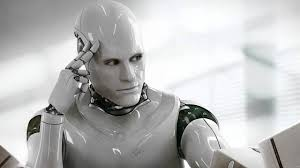
We now have AI.  AI = Artificial Intelligence. Artificial intelligence (AI) is intelligence exhibited by machines. Amazon.com CEO Jeff Bezos says we're at the earliest days of artificial intelligence and the influence it will have on consumers' lives. "It's hard to overstate how big of an impact it's going to have on society over the next 20 years," Bezos said on stage at the Code Conference in Rancho Palos Verdes, California.


NYDLA.org advisor Edward Hess, University of Virginia Professor of Business Administration and Batten Executive-in-Residence states: In the next five to 10 years, we will see businesses of all sizes impacted and challenged by a combination of technology advances, including artificial intelligence, global digital connectivity, the Internet of Things, Big Data, increasing computer power, Cloud AI SaaS Services, 3D manufacturing, smart robotics and the beginning of artificial emotional intelligence.


These technology advances combined will likely:


  1. Transform how most businesses are staffed, operated and managed
  2. Change the nature and availability of work in our society
  3. Infuse smart technology and data science into every business function
  4. Commoditize operational excellence
  5. Make innovation and human performance the primary value creation differentiators


The full article here http://ideas.darden.virginia.edu/2016/09/leadership-in-the-smart-machine-age-the-4es/

What once seemed to be many years away (pizza delivery via drones, self-driving cars, etc.) are now HERE. Today.


Self driving cars (and ships, buses, trains, aircraft?) are here now. And this means no more parking tickets, no more speeding tickets, and maybe even no more car accidents. What will this do to the economy? How many municipalities rely on income from parking and speeding tickets? If there are no more car accidents, what impact will that make on life-saving organ donations? Most organ donations are a result of car accidents.


A chatbot lawyer service set up by a teenage programmer to appeal parking tickets has helped overturn over $4m in fines since 2014. The DoNotPay bot is described by its 19-year-old creator Joshua Browder as “the world’s first robot lawyer” and has taken on 250,000 cases—winning 160,000 of them. Browder made the bot freely available and has described it as a tool to help prevent local governments taking advantage of their citizens.
Full article here http://www.newsweek.com/robot-lawyer-chatbor-donotpay-parking-tickets-475751?

What does IBM Watson mean for the world? Will a medical doctor ever “go against” the advice given by IBM Watson? And if so, what will taking (or not taking) medical advice from Watson do to malpractice insurance? If Watson was available - and you don’t ask Watson for advice, is that alone negligence and/or a form of malpractice?


How far away are we from IBM Watson (Attorney, Doctor, Teacher) affecting the global economy, especially via replacing jobs?

Aye = Yes  
Aye Aye = I understand, and will comply.

Remember, the difference between "Aye" and "Aye Aye" could be life and death, to a ship at sea. And now, we have gone from Aye Aye, to just "AI”. 

Who is the master and who is the servant? 

The AI genie has been released from the bottle - much sooner than anyone predicted.


Sunday, September 4, 2016

What do you do?

My friend David Burkus (www.DavidBurkus.com) does many things. One of them is running a really great podcast. He interviews cool people, and every podcast begins with the question: Who are you and what do you do? And everyone knows this question is coming, so they had time to prepare their answers. These people are some of the smartest people on the planet. And yet, many of them seem to struggle with their answer.


Labor Day in the United States is a public holiday celebrated on the first Monday in September. It honors the American labor movement and the contributions that workers have made to the strength, prosperity, and well-being of the country. It is the Monday of the long weekend known as Labor Day Weekend and it is considered the unofficial end of summer. I write this blog on a Sunday, smack in the middle of the “end of summer” celebration.


When we were kids, we would be asked: “What do you want to be when you grow up?” And we would shout out things like: Doctor! Fireman! Teacher! Policeman! Baseball Player! Nurse! Astronaut!


At such a young age, we could not know the difference in earning potential from one profession to another. As kids we answered this question based on pure emotion. What would it "be" like to become a Doctor? What would it “be” like to become a Fireman? What would it “be” like to become a professional athlete? We were too young to know or worry about little things like car payments and mortgages and student loans. Money had nothing to do with it.


Somewhere along the way, the questions went from “What do you want to BE when you grow up” to “What is your college major” and “What do you do for a living”.


The process shifted. It went from “being” something to “doing” something. And the money - exchanging our time on planet earth doing something - for money - entered the conversation.


When I was in High School in Boca Raton Florida, the Quarterback of the football team was - amazing. I knew him since the 7th grade. Every sport he played - baseball, track, basketball, everything - he just excelled. FAST! Oh, such a fast runner. He went on to college, and everyone knew that he was one day going to win the Super Bowl. It was going to happen! The talent, the skill was there - we just need to watch it all unfold! Then, there was an injury. And a few unlucky breaks.


There was no NFL career for my friend.


But he did pursue a career in football. The passion for the game was too strong. The love of the sport, the “fire in the belly” as they say, was too much to ignore.


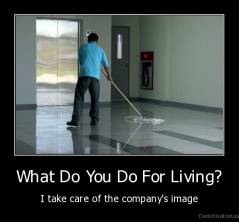
Labor Day has become a holiday to celebrate and reflect on “what we do for a living” rather than what we do - since what we do is really who we are.


When we retire (if we ever CAN retire…..save that topic for another blog) we talk about our careers - as if once retired we have transformed into a different person. When we talk about our past work, when we reminisce about our past careers we are describing our identity, our purpose. The “thing” that we did for a living, the actions that we performed in exchange for compensation becomes everything.


As we celebrate the long holiday weekend, try to reflect on this interesting process. We go from “what do you want to be” to “what do you do” to “what did you do” - for a living. 

Don’t let the compensation (the money) that you exchange for your time on planet earth become your label. Parents: teaching moment for your kids!


What you do - and what you have done - should always match your passion. It should be your special purpose. Financial compensation has nothing to do with it. We all have bills to pay, we all have financial responsibilities. 

Passion needs to equal Profession.


The next time someone asks you “What do you do?” stop and ask yourself - do they want to know about my passion - or are they trying to figure out how much money I make? The secret to a successful life and career is to have “what do you do” and “what do you do for a living” have the same answer. 

Too often, the answer to these two questions are very different. And that is sad.


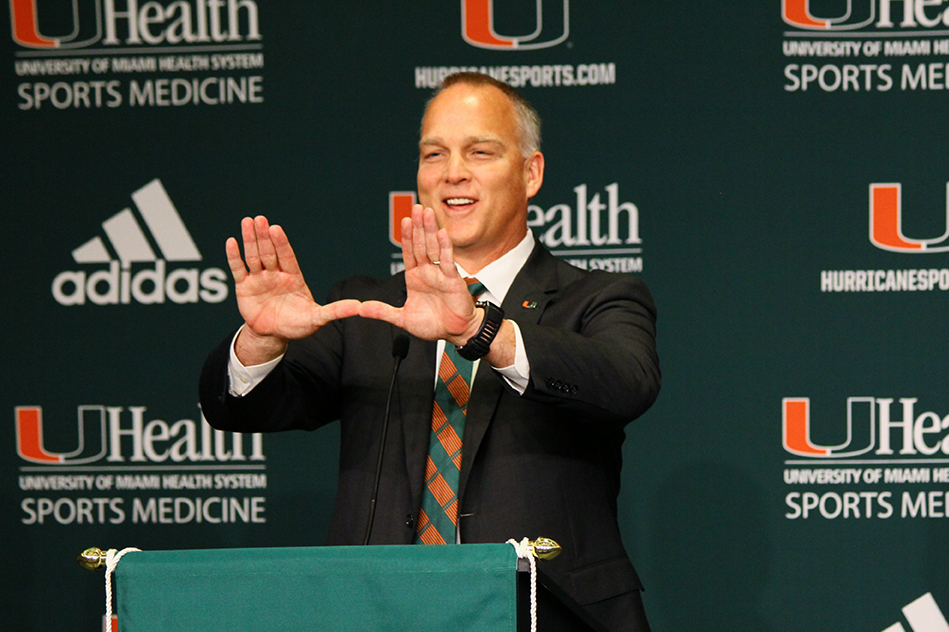
Mark Richt is the head coach of the University of Miami Hurricanes. Prior to Miami, Richt served as head coach at the University of Georgia for 15 years, Offensive Coordinator and Quarterbacks coach at Florida State University for 14 years, and as offensive coordinator at East Carolina University.

Sunday, August 21, 2016

A plague o' both your houses


Often quoted as "A pox on both your houses." This is a famous quote from Romeo and Juliet. As Mercutio dies, he utters this phrase three times, cursing the families whose rivalry led to his death. We’ve all had nightmare customer service experiences. Some experiences so vile, so painful, that we might find ourselves secretly cursing the person on the other end of (the phone, the email, the “your call is important to us” phone robot). This probably brings back vivid memories of wishing you could transport yourself (like on StarTrek) to the call center.  “Energize, Scotty! I’ve got a customer service miscreant that needs to meet my phaser...”

And then, every once in a great while, the opposite happens. 


A customer service experience so good, so amazing, so flawless - that it stops you in your tracks. Customer service so impressive, that is makes you feel like you are watching Triple Crown winner Secretariat taking the Belmont Stakes in what remains a record time, leaving the field far behind him (I was there in 1973 screaming “That’s impossible!”)


We use Highrise and Basecamp in all of our companies. The FAQs on their respective websites are good, and their “self-service” customer service is strong. But I had a specific question about how a certain feature worked in Basecamp. I was about to make a significant change in how we do things in our back office. If I got it wrong, disaster could ensue. So, even though the FAQs were clear, I needed some hand-holding. I needed to make sure. So I sent off my email to Support. On a weekend. I’m hoped to hear back sometime next week.


Ah, no.


Minutes later, “James” from Basecamp is in my inbox. No robot, no auto responder. James (turns out he was in Berlin) is answering my question, with such detail and care that it felt like he was talking to me, standing behind me, with his hand on my shoulder. Words matter, but I “felt” James in the room with me.


There was a flurry of emails back and forth, with me now having a virtual conversation with my new BFF James from Berlin. And then with all of my questions answered I sent this email to James (and to the entire support team) at Basecamp:


Just so you know, the level of customer service from Basecamp may indeed be the best - as in - THE BEST I have ever experienced. I am not trying to be overly dramatic here.  It is so good, so fast, so efficient that it makes me pause and wonder how does one duplicate this level of professionalism in my own company. How do you TEACH this? How do you hire for this? We use Highrise and Basecamp to run all of our companies (plus a handful of other SaaS tools). But the technology is only a small part of the process, yes?  I feel that your level of customer service is the gold standard of using technology plus talent via remote work. How can we learn and teach the ways of Basecamp?


Best,
Tom@NYDLA.org


What happened next pushed me over the edge. James then responded with the most eloquent, detailed, helpful, caring email I have received in years. I cannot cut/paste it here without permission. Suffice it to say that James was talking to me like he was my best friend - partner - investor - cheerleader. One human (not a single robot involved) talking to another human. And, he needs my mailing address to send me some “goodies”. I love goodies! Goodies are my favorite thing!


The book REWORK arrives. I have now read it twice, and before this weekend is over, I’ll probably have read it three times. It has been 8 days since my email exchange with James. And I am still stunned.


How can I repay James?


Maybe I can give every member of the NYDLA.org a FREE copy of REWORK, on me. Maybe I can give every member a free trial of BASECAMP and HIGHRISE. And if they love it (what’s not to love) I’ll pay for their first month AFTER their 30 day free trial.


Maybe I can do all of the above?


If James can do customer service like Secretariat, then so can I - so can we! If James can love his customers to this degree, so can we! So it shall be written - so it shall be done!


Starting in September, all new NYDLA.org members will receive a FREE copy of REWORK, and 30 days of both BASECAMP and HIGHRISE. We shall care about our clients and our customers and our vendors and our sponsors - and ALL MEMBERS of our community, with the same passion as James.


There you go, James. I just returned your serve. “Goodies” back at ya!


Sunday, August 14, 2016

My Checkered Past


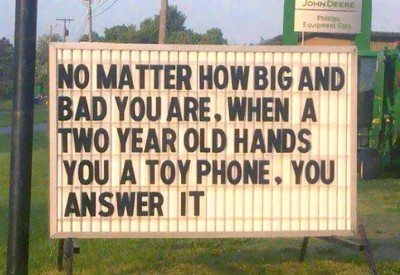
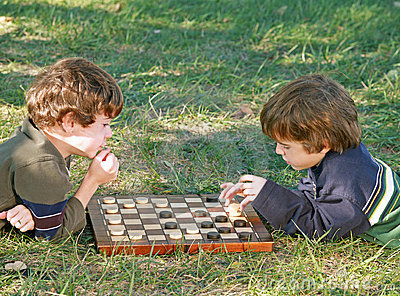
Today for the first time in many years, I played checkers. Similar to the life lesson on the sign: when a kid from the neighborhood comes over with a checkerboard under their arm, you play checkers. You stop writing your blog - and you play checkers.


And, you make sure you look happy and surprised and thankful for the opportunity.


And, you lose. You answer toy phones, and you lose to neighborhood kids in checkers.


Now, I was not sure what was in the box: were we going to play chess, or checkers? Based on age, I assumed checkers (but I did not want to assume anything) since my other neighbor was International Master Dean Ippolito, who started playing chess at the remarkably early age of two-and-a-half, and is one of few International Masters in the United States. Ippolito attained the elite level of International Master in 1999, is a ten-time All-America Team member, eleven-time National Champion and one of the foremost and recognizable chess players in the United States.


But today’s game of choice: checkers.


And, it is going…slow. We are playing checkers, but it is at the speed of chess. And so, I smile as I take out my phone and I Google checkerboard. I asked myself: are checkerboards and chessboards the same thing?

GOOGLE KNOWS ALL:


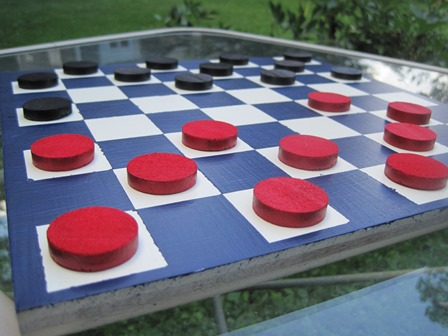
A checkerboard is a board of chequered pattern on which English draughts (checkers) is played. It consists of 64 squares (8×8) of alternating dark and light color, often black and white.


Other rectangular square-tiled boards are also often called checkerboards. In this sense it refers not to a physical board as such but to the mathematical abstraction of such a board.


The adjective chequered refers to the pattern shown in many contexts, such as the checkered flag used to signify the end of a vehicle race, the popular ice cream flavor or the livery on some emergency service vehicles. However, when this pattern is used on such vehicles, in certain countries, it is called a Sillitoe Tartan.


A red-and-white checkerboard is the medieval coat of arms of Croatia, and is widely used in national symbology there.


The checkerboard pattern is often associated with the Ska music genre, for breaking the racial barrier between black and whites at the time.


A checkerboard marking painted on a hilltop was used as visual guidance on Hong Kong's old Kai Tak Airport. Many taxicabs also use a checkerboard pattern.

A checkerboard pattern of alternating aviation orange and white is commonly required for compliance with the FAA as a means of making tall or sufficiently sizable structures stand out, so as to make them clearly visible to pilots, including water tanks, gas tanks, grain storage tanks, tall buildings and flags.


In the time that it took me to lose a game of checkers on my back deck to a fine young gentleman from the neighborhood, the power of the Internet allowed my mind to wander, and drift around the world.  Checkerboards, checkerboard patterns, the “math” of the checkerboard matrix.


And then I asked myself: which came first, the checkerboard or the game checkers? Or the chessboard or the game chess? Did the board come first, and then the game followed, or was the game invented - and then a board made to support the game? And why an 8 x 8 matrix of 64 squares? Why not 6 x 6 or 5 x 5?


Where are you going with this, Tom?


Chess computers were first able to beat strong chess players in the late 1980s. Their most famous success was the victory of Deep Blue over then World Chess Champion Garry Kasparov in 1997, but there was some controversy over whether the match conditions favored the computer. Chess programs running on commercially-available desktop computers had convincing victories against human players in matches in 2005 and 2006. Since that time, chess programs running on commercial hardware - more recently including mobile phones - have been able to defeat even the strongest human players.

And there it is: today - our smartphones 
can now beat any of the strongest human chess players.

My checkers match on my backyard deck took me around the world today. It made me pause and reflect on how Artificial Intelligence is coming. 

Amazon.com CEO Jeff Bezos says we're at the earliest days of artificial intelligence and the influence it will have on consumers' lives.


"It's hard to overstate how big of an impact it's going to have on society over the next 20 years," Bezos said on stage at the Code Conference in Rancho Palos Verdes, California.


I guess it is inevitable that robots will soon be smart enough to beat any of us - all of us - in chess, checkers -or any game. International Master Dean Ippolito or Gary Kasparov or anyone - we are not going to be a match for the AI robots.


I hope that these same AI robots who are doing more and more of our repetitive tasks (our jobs) are also going to be smart enough to know how to LOSE to a kid who rings your doorbell and wants to play a game.

AI robots will soon be able to beat us, every time, all the time - in many, many things.

But will they know when to lose?


Sunday, July 17, 2016

Be careful who you poke fun at

One should be careful who one pokes fun at. Last week, I publicly made fun of folks wasting their time chasing Pokemon. To me it was like fiddling while Rome is burning.

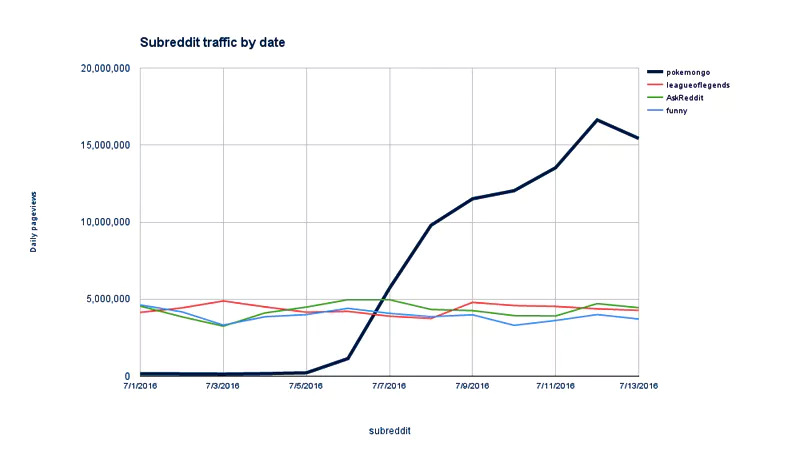
Pokemon Go is really big. Like bigger than big. Data is emerging that shows the game is catching on more than dating, chatting with celebrities, all things social media. Even bigger than all professional sports combined. It’s hard to process how massive this phenomenon is - and growing. Reddit is one of the most-visited websites in the world.This graph shows the most popular subreddit (sections) on the website for the month of July. AskReddit (a subreddit where celebrities answer questions from the general public) had a staggering 38 million page views from 4.5 million unique visitors in the week after Pokemon Go was released.

See the dark blue line? That is the Pokemon Go subreddit, and the green line is AskReddit. The game wasn’t out the month before. That week after Pokemon Go this dedicated subreddit accrued 92 million page views from almost 8 million unique visitors.


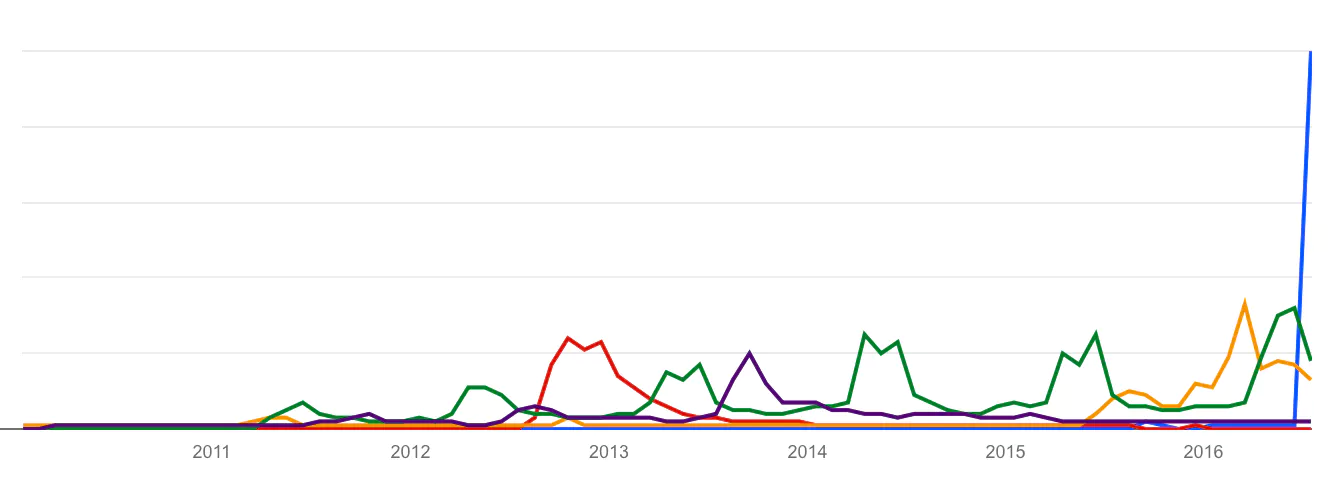
Google Trends graph: the most frequently searched terms from January 2010 to the present day. The first green hump you see on the left there is Game of Thrones which jumps around the same time every year. The red line is ”Gangnam Style.” The purple line is Breaking Bad. The yellow line is the term “Trump” spiking around the time he won the New Hampshire primary. That giant blue line on the far right is Pokemon Go.


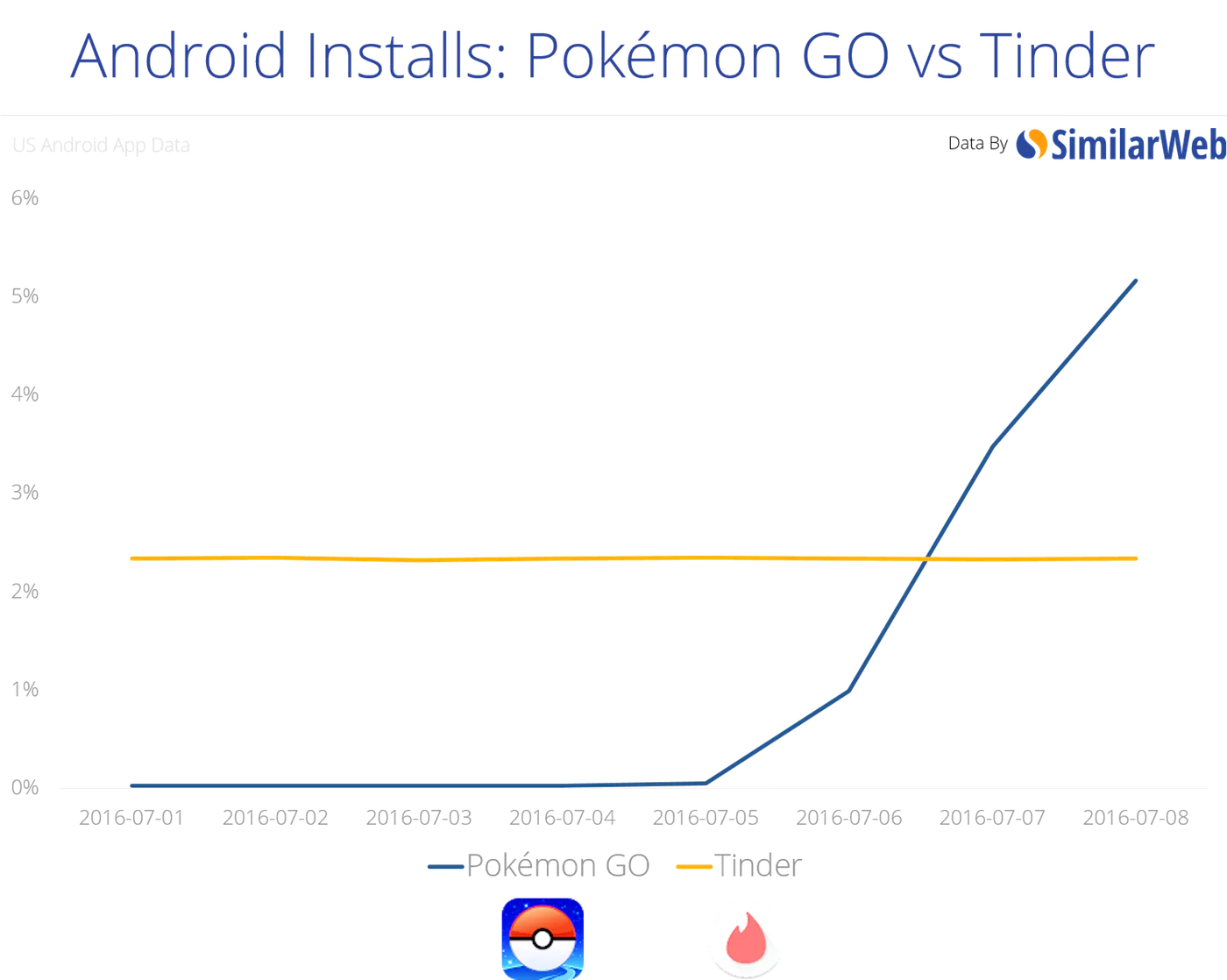
This graph shows Android phones that have Tinder installed versus Pokemon Go. New installs went viral. 

A game about chasing things that do not exist has now crushed an app that involves meeting new people and going out on dates.The app has shot past Tinder and looks to rival Twitter for dominance.


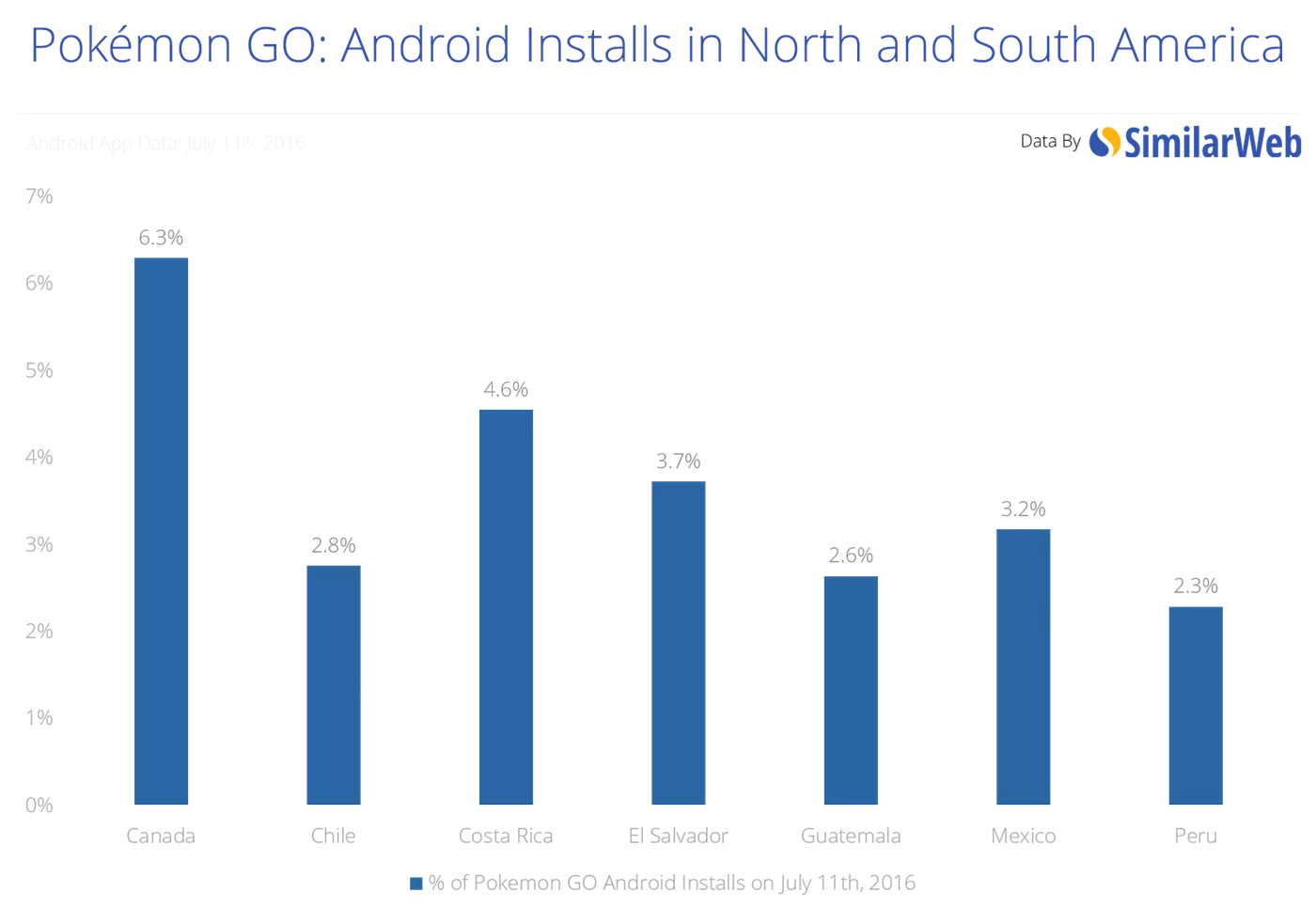
Not all countries can install Pokemon Go from the Google Play Store. 

Users are downloading the app’s APK file and loading onto their device via a very cumbersome process. People are doing whatever it takes to get the game and play the game. Despite these limitations, Pokemon Go is installed on over 7% of Canadian Android devices that are in use. 

I made fun of people running around outside chasing things that do not exist. Well the thing that DOES exist? The people doing the chasing. These people exist, big time.

I can’t wait to see what the next seven days does to these numbers. This is bigger than big. And it looks like it is speeding up with no signs of slowing down. I have yet to play the game but I am no longer ruling it out. Ah yes, be careful who you "poke" fun at. 

Maybe I can launch a game called "Eating Crow"?

Sunday, July 3, 2016

WHY us?

Simon Sinek "The WHY of the USA"

Two years ago, I did my Sunday blog during the Fourth of July holiday weekend, and I called it 

This morning, our good friend Simon Sinek of Start with WHY fame was my muse for today's holiday blog. If you have not watched Simon's TED.com talk, you should. Today is Sunday, tomorrow is a holiday. No excuses - go watch that TED.com talk before your next day at work. 

Why America is NOT the greatest country in the world, anymore?

Remember this one? HBO is a major media provider, so there is a good chance that you have seen "The Newsroom" series. YouTube says this video has well over 4 million views. So, if you are reading my blog, that you probably have seen this clip more than once. 

If you did not watch Simon's video above, and if you truly never watched the above clip from "The Newsroom" you can continue reading, but it will make more sense if you have watched them. So please, go ahead, I'll wait.

OK, ready?
I found this on the Internet. Now, some of you are cheering and shouting YES! And some of you are now violently ill. I get that. But let's break it down:
  • This "hat" assumes that we can "make" our country (or any country) great.
  • This "hat" assumes that our country once was great, but for some reason stopped being great, but (have no fear) it can be fixed and made great again (like we took a wrong turn on our family vacation, while driving to Yosemite).
  • Did anyone actually look up the definition of the word again before they made this hat?

Examples from Cambridge (get it?  USA <> UK? Oh never mind...) Dictionary Online:

  • If you think it's wrong, cross it out and write it again.
  • "I never want to see you ever again, " he shouted as he stormed out of the house.
  • I'm not going to let him repair my bike again because he made a really bad job of it last time.
  • I was very nervous about driving again after the accident.
  • If the phone lines are busy, please try again later.

From what I can see, the word "again" is often associated with errors. Mistakes. Negative experiences. Experiments gone wrong.

The Great Experiment is often a reference to the United States. I love the word experiment. A procedure undertaken to make a discovery, test a hypothesis, or demonstrate a known fact.

Two years ago, I blogged on "Dependence Day" in an attempt to tie all things technology to our everyday world. You would not be reading this blog it were not for the Internet. You would not have HBO, or YouTube, or the iPad or laptop or tablet that you are using to read this post (hopefully from the beach). Colleges and Universities would not be "in the cloud" and there would be no Telemedicine, no Netfllix, no Uber and certainly no self driving cars. 

If it were not for "The Great Experiment" of the USA, we would not have 99% of the things that we take for granted. Sure, many other countries might have followed our path. Many others might have eventually went to the moon, and cured polio, and invented the laser. But we did it. The USA. The land of the free, the home of the brave. 

And with our "laboratory tools" such as the Declaration of Independence and the Constitution, our WHY, our HOW and our WHAT have become an amazing TED.com talk with "Ideas Worth Spreading". 

I'm not sure if America needs fixing. I'm not sure if it was ever broken. I am not sure if it was ever great, or if ever stopped being great. What I am sure of is this: I'm glad it exists. 

Is TED.com a good thing? I think so. I guess someone out there probably hates TED.com and says it is a terrible idea. But for me, the fact that TED.com was created, the fact that TED.com was "born" and that TED.com then "spread" is a good thing. It was a good experiment.  

We should always seek out and support and spread the good experiments. But the only way to get to the "good experiments" is to go through the pain and suffering of the bad ones. 

And now, through the miracle of "The Internet" (Thank you, USA) here are the last minutes of "The Newsroom" to bring it all home for you. Enjoy. 

What makes America the greatest country in the world?
You do.

The Internet is the global system of interconnected computer networks that use the Internet protocol suite (TCP/IP) to link billions of devices worldwide. It is a network of networks that consists of millions of private, public, academic, business, and government networks of local to global scope, linked by a broad array of electronic, wireless, and optical networking technologies. The Internet carries an extensive range of information resources and services, such as the inter-linked hypertext documents and applications of the World Wide Web (WWW), electronic mail, telephony, and peer-to-peer networks for file sharing.
The origins of the Internet date back to research commissioned by the United States federal government in the 1960s to build robust, fault-tolerant communication via computer networks.