Sunday, June 19, 2016

You, as a Verb


You, as a Verb. Part One


I still remember it, vividly. It was a hot Sunday morning in August, 2010. I noted how it was already “hot” as I sat on my deck, having coffee. Little did I know, I was about to have a life changing moment. My “Seth” moment.  


(Please follow the “cut and paste” of my email exchanges below; I sanitized some of it for obvious reasons.)


On Aug 1, 2010, at 8:08 AM, Thomas A. Capone wrote:


I saw you on Ted.com and now I am off to buy all of your books.  I hope to catch you live when you are in the NYC area.  Good stuff. < ...and I hit………*send >

******
*That was it. Done. I just felt compelled to send off this little missive to someone I did not know, so I did. I certainly did not expect a return.  And now, back to my Cheerios.


******
From: Seth Godin  
Sent: Sunday, August 01, 2010 8:46 AM
Subject: Re: thank you
thanks Thomas!
=============================
Seth Godin
45 Main Street 3R
Hastings on Hudson, NY 10706
******


Wait, what??? In less than an hour, on a Sunday morning, I’m getting a response to “that” email? Was this an auto-responder? If so, why the delay??? And so, I must return the volley!


******
On Aug 1, 2010, at 8:57 AM, Thomas A. Capone wrote:


I don’t know if this is “really Seth” or an autobot, but here goes.......  I never bought any of your books.  After watching you on Ted.com I am now compelled to buy them all.  And I will – promise.  I’ll fax you the receipt.  My question is this: since you have so many books, would you recommend that one read them in any particular order?  I thought that the order that I read them might make a difference, since things do change.  I really am a “salesman” at heart, and I love the science of sales and marketing.  If I could just sell sell sell all day long, I would be a happy camper.  I am now signed up on your blog. Very cool stuff; I am in sync with your style.
So, if this is really Seth, you have a new fan.
If this is an autobot email responder, take the rest of the day off.  Go ahead, Seth will understand.
 
Thomas A. Capone
Chairman & CEO
******
And then……… his return:


Sent: Sunday, August 01, 2010 9:17 AM
Subject: Re: thank you
it's me
salespeople will like All Marketers are Liars (new title All Marketers tell Stories) the most, followed by the Dip and Linchipin and Tribes and Purple Cow
have fun
Seth Godin
45 Main Street 3R
Hastings on Hudson, NY 10706
fax 914 674 XXXX
******


Oh……….my……….God.  I knew it was “him” since he misspelled Linchpin! A robot would not do that! I am emailing back and forth with Seth Godin. This is...happening.


And so, it began. I have a new pen pal. Sunday, August 1st, 2010. A day, that will live in infamy. No, wait. What is the OPPOSITE of infamy? Dignity, goodness, innocence, morality, righteousness, virtue? Oh, never mind. The ball was now in play!


I did not “know” this man; I knew “of” him. And, I knew enough about him that he must get a million emails from a million people, daily. And here he was, on a Sunday morning, hitting the email tennis ball back and forth across the net. With me.


2149 days have passed since that original email exchange.


A few days ago, my email to Seth:


Date: Fri, Jun 17, 2016 at 7:58 PM
Subject: 4th row


I was in the 4th row at Sales Machine. We were a sponsor.


Why would ANYONE ever agree to follow you on stage????????  ;-)


Simon pulled it off. But really, never follow Seth.


Best,
Tom@NYDLA.org


*******


Date: Fri, Jun 17, 2016 at 9:36 PM


thanks Tom


you're very kind, sir


and I think Simon did great!


Seth


******


Wow, approximately 90 minutes later, I get a response. From Seth. Not an assistant, but him. Maybe one of the busiest, most “in demand” people on the planet, replied to my email. As he has done dozens of times before. Folks, process this. By the way, we were talking about the amazing Simon Sinek of Ted.com fame, who followed Seth on stage.


After 2149 days of “Seth being Seth” he is still Seth. How many keynotes has he agreed to do, since August 1st, 2010? How many (more) best selling books has he published? He commits to writing and posting a daily blog. And to him, daily means - every day. Over the past 2149 days, we have become friends. Over the past 2149 days, we have added Seth (and all things Seth) to the NYDLA.org because it felt like the right thing to do for our global community. Introducing the world to “Seth” and all that he stands for, feels like a duty. My job. Introducing the world to Seth is like giving someone a shortcut to things that matter. Keeping Seth a secret feels, well, wrong. Seth Godin certainly does not need my help to “spread” his brand - but he does not turn it down, either.


And now, over the past 2149 days, many of Seth’s friends have become our friends.


You, as a Verb: Part Two


You hear it in movies, TV shows, among your friends and you probably say it yourself: "I Googled her before I called her." "I know because I Googled it." "What's the temperature in Fargo? Google it!"


But Google wants you — and the world — to stop using Google as “a verb” for looking up anything on the Internet — unless you actually used Google's search engine to do so.


Google became so good at what they do, that even if you used “another” search engine, you would be thinking you “Googled it”. With Google as the leading search engine, there's little doubt that we mean Google when we say we Googled something. As comedian Ellen DeGeneres said on her show, talking about technology's impact on our lives, "If you need to know something immediately, you can Google it now .... Ten years ago, if you said you were going to 'Google' someone, you got written up by Human Resources."


So, what can be bad about using "Google" as a verb for saying you looked up information on the Internet?


Ironically, because of Google's "significant brand recognition," the company "has started down the path of becoming synonymous with search engine services and, accordingly, towards the genericization of a trademark," wrote attorney Matthew Swyers, founder of a law firm specializing in trademark rights, in an article for Inc. last year.


A generic trademark, also known as a genericized trademark or proprietary eponym, is a trademark or brand name that has become the generic name for, or synonymous with, a general class of product or service, usually against the intentions of the trademark holder.


And becoming generic is bad because it threatens a company's legal right to a trademark.

Aspirin was originally a trademark of Bayer. Escalator was originally a trademark of the Otis Elevator Company. Even the word Zipper, at one time, was a trademark owned by B.F. Goodrich. Now, because of their respective fame and genericization, they merely refer to classes of products we see every day and do not identify the source of those goods.


Google became “a verb” because they honed their craft. Google became much better than the rest; they were understood to be “so good” that it simply became “the way” to do it.


I feel that there are many life (and business) lessons buried in today’s blog. As you can tell, I have become a huge fan of Seth Godin’s work, and it is still climbing. But the one lesson that stands out to me the most, the one concept that resonates, the one thing about this man that “should spread” (as Seth would say) can be summed up in only one word:


Google: Seth


< Mic drop >

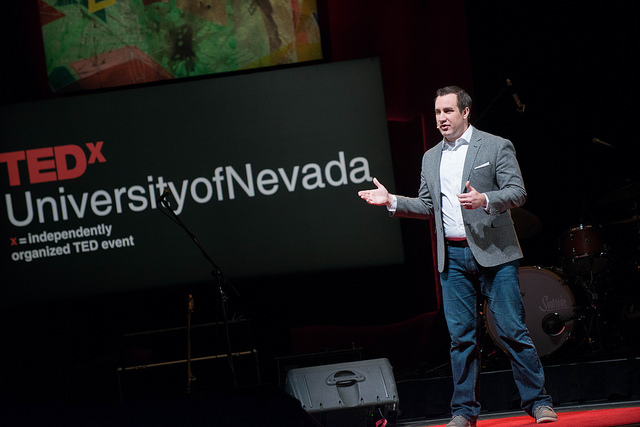
Simon Sinek following Seth Godin on stage


Sunday, June 5, 2016

Seedcasting

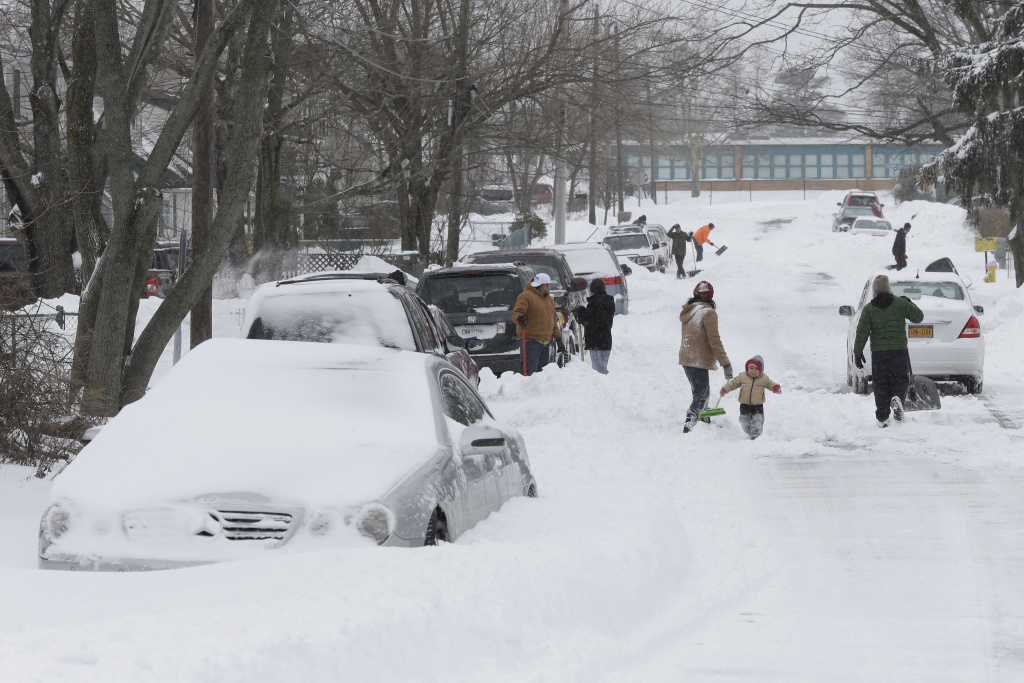
In late January 2015, a powerful nor'easter affected Canada and the Central and Eastern United States. The nor'easter disrupted transportation, with snow emergencies declared in six states and travel bans enacted in four of these states – Connecticut, New Jersey, Massachusetts, and Rhode Island – as well as in New York City. Most passenger rail service was suspended, and thousands of flights were cancelled. Schools and activities saw weather-related cancellations for one or more days. The storm was also given unofficial names, such as Blizzard of 2015, and Winter Storm Juno.


This is when I planted my crop.


I came across David Burkus (www.DavidBurkus.com) and his podcasts during my "Mother Nature" imposed home confinement. I played one of his podcasts (originally called LeaderLab) in the background, while working on other things. Wow, pretty good. Then I played another one. Huh, not bad. And another........


So, I found that the “first one” was recorded in January 2010. I went to the oldest one in the archive. I started working my way backwards in time. 

“Honey, I can’t go outside and shovel snow - I’m working on Project Juno!”


Podcast 101, 102, 103…….201…...202…….401……..402……….601…...602...603......


Do the math.  If a podcast runs 30 to 45 minutes, that was around maybe seven or eight podcasts in a day. I had around three days, with no way to leave the house (well, I did not want to leave the house, if a snow shovel was going to be involved).


A few things happened as a result of my “Project Juno”.  One, I made a spreadsheet and listed Name, Twitter, Facebook and LinkedIn profile of all of the podcast guests.  I made it a point to attempt to connect with them.  All of them.


“Hello. I just listened to your podcast with David Burkus. It was amazing, thank for your time.”


Then, I made it a point to meet many of them. Including David himself. Sooner or later, everyone comes to New York. “Well, if you are ever in New York City, I would love to meet with you. Lunch or dinner on me.”  Oh, the power of offering free food and grog in NYC.


And, from time to time, I would throw my fastball:  “I run the www.NYDLA.org  You would make an excellent keynote and/or webinar for our community.”


Boom.


Fast forward to June 2016.  As I look back, more than 50% of the business that we processed in 2016 can be traced back to the seeds that were planted during that blizzard in 2015. My father used to tell me “show me your friends, and I’ll show you who you are” and that always stuck with me. You can pick your friends. You can seek them out.


Webinars. Podcasts. Meetups. Live events. Book signings.


I don’t think that (at the time) I realized that I was planting a crop for future harvest. In fact, I think I was just looking for an excuse to NOT shovel snow. But today, I look back on where new business comes from, where opportunities come from, and from where your next best friendships shall grow.


During “Winter Storm Juno” I planted seeds. Not sure if this strategy will work for growing crops in the mid-western USA, but it worked for me (big time) in growing my BUSINESS.

Last Point: www.DavidBurkus.com is an amazing guy - and he also grabs the check! 

My favorite kind of friend.


Sunday, May 22, 2016

Mad Skills


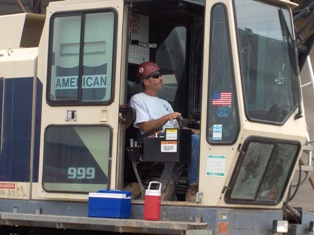
My uncle Tom Capone was an Operating Engineer - Crane Operator. When I was young, I would work in construction for the summers, making money for college. People would say to me “You... are Tom Capone???”  But you are so young! Oh no, you are talking about my uncle…..I’m no crane operator. 


See, in his world, Operating Engineer Tom Capone was famous. He had mad skills operating a crane. In hindsight, it was like how some kids today can master a video game, and others can’t get past the first level.


In big (“heavy”) construction, cranes are key to the job site. The speed, efficiency, and overall “production” of the crane and crew sets the pace of the job. It could easily cost a General Contractor thousands of dollars per day to rent a crane and crew.


Now, if you had “mad skills” like my Uncle Tom, you were always in demand and NEVER out of work. In fact, it was known that many times a General Contractor would ask for my uncle by name, because they knew that his crane operating skills, his talents, his ability would save them - make them money. I know of times where jobs were delayed - they would not start the job until my uncle was available. They would rather delay the start of the job - knowing that the value of my uncle’s crane operating skills were worth waiting for.


It was not just the General Contractors that knew of my uncle’s reputation. The workers on the ground - the laborers, the iron workers, they all knew of Tom Capone. THEY WANTED to work on jobs where Tom Capone was going to be operating the crane. They felt safe. And because they felt safe, they would work better. They would be able to focus on the work at hand, knowing that a true master operating engineer was at the controls. It would all add up, creating a multiplying effect. My uncle’s skills allowed him to create maximum productivity on something that was costing the owner thousands of dollars per day. The rest of the job site would benefit from a form of “trickle down” efficiency. The safe workers would produce more, the entire job site would be running at the pace of the crane.  If the big rig could “do an extra ten or twenty picks” a day (construction lingo) that adds up fast. The efficiency of the crane and crew can shave days (or even weeks) off the overall schedule of the job. This savings can add up to really big money. If the job is big enough (a bridge or a tunnel or a stadium) this could translate into millions of dollars in savings.

If there is a "franchise player" on a job site, it might be the operating engineer crane operator.  


The speed of the crane is the speed of the job.


The world that we live in now - the global workforce - creates the same opportunity for people to stand out - to be “in demand”.  Just as there are many, many “crane operators” in the world, there are some that have a reputation. There are some that will be asked for by name. There are some general contractors that will say it is worth delaying the job - the decision is made that it is worth waiting for this person to become available. 

This person is worth waiting for....... powerful.


The Internet allows for coders, designers, webmasters, project managers, bookkeepers, teachers, even doctors - to work from anywhere in the world. The Internet has created a true global workforce.  But there is still an opportunity to stand out from the crowd, maybe now even more than ever. Clayton Christensen, is an example of a man in demand; a man with “mad skills” like my uncle. And now, thanks to the Internet, he can appear in YOUR office, your home, your laptop.


I miss my uncle Tom Capone, and his brother (my father Anthony). Thirty years later, I am still learning from my summer jobs, working construction.

Sunday, May 1, 2016

Our Worlds are Colliding

A Collision is an event in which two or more bodies exert forces on each other for a relatively short time. It is a short-duration interaction between two bodies or more than two bodies simultaneously causing change in motion of bodies involved due to internal forces acted between them.


The NYDLA.org attend the CollisionConf.com last week as a media guest. At first I questioned the name “Collision” for such an event.


Now, the choice of the name “Collision” is crystal clear.


More than 11,382 people attended the Collision technology show in New Orleans according to numbers from conference officials. That’s almost 4,000 more than attended last year’s conference in Las Vegas. The show moved to New Orleans this year to take advantage of the week in between Jazz Fest weekends. It ended Thursday at the Ernest N. Morial Convention Center.


Other numbers from the Collision conference:
  • 332 speakers and moderators on stages and leading roundtables
  • 630 startups exhibited
  • Trello, TenantCloud, and Life.io were the startups that investors most wanted to see
  • 407 investors scoping out startup talent
  • 60 leading funds took part in Office Hours, where investors met with promising startups
  • 700 investor/startup meetings
  • 400 mentor hour sessions where experienced entrepreneurs and investors offered advice to startups. That’s around 133 meetings per day. Mentors included Jeff Glueck of Foursquare and Katy Dormer of Desk.com
  • On the CollisionConf app, the most favorited startup was Trello. Investor Chris Sacca was the most favorited attendee
  • The average length an attendee spent in one session was 8 minutes and 43 seconds


What’s exactly is Collision?

When Web Summit started as a small 400 person startup conference in Dublin in 2010 nobody imagined that by 2014 it would grow to 22,100 attendees from 110 countries around the world.


Collision is Web Summit’s sister conference in the United States. It started in 2014, but is growing faster than Web Summit ever did. Maybe they should change the name from Collision to “Chain Reaction”.


If I were asked to define the word “Collision” this time last week, I would have described a car crash, or maybe the elastic collision of billiard balls. But now, I think of the permanent change that a collision creates. I have been in business since 1983 and I lost count of how many trade shows, events, and conferences I have attended over the years.  Collisionconf.com is the master of them all.


So many times people attend conferences because they “have to go” or because their boss made them go to “work the show”. This is not the case for Collision. The people that I met (and I tried to meet all 11,000+) all wanted to be there. Desperately. They attended the conference because it was in their DNA to attend. They were compelled to attend. They needed to be there, not just to attend, but to interact, to experience, to “collide” with their tribe.


I understand that if you are into horses, or cooking, or cars (or anything) there are trade shows and industry conferences for YOUR area of interest - there are events for your world. I get that.


But here is the point: everything in YOUR world, will be changed by the people who attended Collision. The next Facebook. The next Airbnb. The next Google, Microsoft, Netflix, Uber, Apple, Twitter, Tesla come from the fertile minds and passionate entrepreneurial spirits of the attendees of Collision.


YOUR WORLDS shall collide with their worlds. It is inevitable. Your business, your industry, your life, will be changed forever by the people who were in New Orleans this week. And when worlds collide, things cannot remain the same as before the collision.

Worlds are indeed.........colliding


Sunday, April 24, 2016

Life, Liberty and the pursuit of Appiness


Sometimes I throw around the latest tech words assuming others know what I am talking about because I spend so much time with technology and the words are common to me. But the general population may still consider words such as “app” to be mysterious.


Way back in January 2011, the American Dialect Society named “app” the word of the year for 2010. Being named word of year signifies that a term is trendy and growing in its popularity.  But just because the use of a word is growing, we shouldn’t assume that everyone knows it. Being named word of the year implies that the word is newly prominent.


The word app is a noun, and it’s short for “application.”  Application in this case refers to a software application — in other words, an app is a software program. But an app is not just any old software program — it’s a special type of software program.


An app typically refers to software used on a smartphone or mobile device such as the Android, iPhone or iPad, as in “mobile app” or “iphone app.” But the  phrase “Web app” or “online app” is also used in a business setting as an abbreviation for “Web application” or “online application” meaning software that you access and use while online, via a browser, instead of software residing on your computer.


For small-business purposes, we don’t need to get complicated. For most of us, it’s sufficient to think of an app this way:  an app is a software program that you use online or on mobile devices.  


Why should we all care more than we do about apps?”  


Web apps or online apps can be a faster, cheaper, more efficient way of deploying software in your business.  Rather than buying a software license, having to install it on your servers or local computers, keeping up with updates you can simply go online and sign up for an account.    


Mobile apps extend the reach and productivity of your business.  Once you equip your mobile device and/or your employees’ mobile devices with apps, then you and they can perform all sorts of business functions while out of the office traveling, on sales calls, making service calls, etc.  A mobile app usually enables you to do something specific, like accessing your bank account in the case of a banking app, or run payroll with a payroll mobile app.

I’m attending the www.CollisionConf.com in New Orleans this week with my son, and they have a very cool app. It is a tech conference, so this is not a shocker. What IS somewhat of a shocker is that to attend the conference you MUST download the app to your mobile device.  It is mandatory. No appy, no happy.


The world is about to become a very appy place. You must use these apps, or you must shop (go, visit, play) somewhere else. And that is something to think about. 
Image result for apps


I use E-Z Pass in my car, and I love it.  It saves me time and money - but it is still my choice. I could still pay cash at bridges and tunnels, but I choose to be automated.  The world of app development is becoming less about choice, and more about what is good for the supplier or the vendor.


Apps are very cool indeed, until they are no longer cool. Paper money is on its way out, but not yet. Debit cards and paying with my smartphone is cool, but I think the “cool” will go away if I am no longer allowed to decide for myself.


"Life, Liberty and the pursuit of Happiness" is a well-known phrase in the United States Declaration of Independence. The phrase gives three examples of the "unalienable rights" which the Declaration says has been given to all human beings by their Creator, and for which governments are created to protect.


Image result for apps

Happiness (appy-ness) should be pursued, not forced upon us, right? So, if you "choose" to click on www.TomCapone.com you will find me on one of my most favorite apps. Or not, up to you.