Sunday, December 18, 2022

Get Fired Up!

If you are reading on a smartphone, use landscape / hold phone sideways. 


My entire family (less me) was in construction in North New Jersey. Big construction, heavy construction. Bridges, tunnels, roads. Things like GIANTS stadium or building out the Meadowlands. As my Dad would say, "We are Earth Movers." And in the construction world, many times the winter would be the time when things slow down. As in, no work. Most big construction jobs do not "launch" when there is snow on the ground.
So, in our family's world, you knew that every job you ever started - you were going to get laid off. Especially during the winter. 
The key difference between being laid off vs. getting fired is that a layoff is the fault of an employer while a firing occurs because of the employee's fault. Most workers get laid off because the company is trying to cut costs, reduce the staff, or due to mergers and acquisitions. 
Tech companies have been laying workers off by the thousands. In 2022 over 120,000 people have been dismissed from their job at some of the biggest players in tech –Meta, Amazon, Netflix, and soon Google – and smaller firms and startups as well. Announcements of cuts keep coming.
Moreover, layoffs don’t work to improve company performance. Academic studies have shown that time and time again, workplace reductions don’t do much for cutting costs. Severance packages cost money, layoffs increase unemployment insurance rates, and cuts reduce workplace morale and productivity as remaining employees are left wondering, “Am I next?”
The tech industry layoffs are basically an instance of social contagion, in which companies imitate what others are doing. If you look for reasons for why companies do layoffs, the reason is that everybody else is doing it. Layoffs are the result of imitative behavior and are not evidence-based.
I’ve heard people say that they know layoffs are harmful to company well-being, let alone the well-being of employees, and don’t accomplish much. But everybody is doing layoffs so why don't we do the same?
Could there be a tech recession? Yes. Was there a bubble in valuations? Absolutely. Did Meta overhire? Probably. But is that why they are laying people off? Of course not. Meta has plenty of money. These companies are all making money. They are doing it because other companies are doing it.
Layoffs do not cut costs. There are many instances of laid-off employees being hired back as contractors, with companies paying the contracting firm. Layoffs often do not increase stock prices. In fact, layoffs can signal that a company is having difficulty. Layoffs do not increase productivity. Layoffs do not solve what is often the underlying problem, which is often an ineffective strategy, a loss of market share, or too little revenue. Layoffs are basically a bad decision.
Some companies are laying off people they just recruited – oftentimes with paid recruitment bonuses. When the economy turns back in the next 12, 14, or 18 months, they will go back to the market and compete with the same companies to hire talent. They are basically buying labor at a high price and selling low. Feels kinda dumb.

Why ignore the evidence against layoffs? If companies paid attention to the evidence, they could get some competitive leverage based on science. After the Sept. 11, 2001, terrorist attacks, every airline except Southwest did layoffs. By the end of that year, Southwest, which did not do any layoffs, gained market share. Procter and Gamble's CEO said the best time to gain ground on your competition is when they are in retreat – when they are cutting their services, when they are cutting their product innovation because they have laid people off. 
The CEO of the software company SAS Institute, has also never done layoffs – he actually hired during the last two recessions because he said it’s the best time to pick up talent. Lincoln Electric, a famous manufacturer of arc welding equipment did this: instead of laying off 10% of their workforce, they had everybody take a 10% wage cut except for senior management, which took a larger cut. So instead of giving 100% of the pain to 10% of the people, they give 100% of the people 10% of the pain.
Companies could see a recession as an opportunity. In the 2008 recession and the 2000 tech recession SAS used the downturn to upgrade workforce skills as competitors eliminated jobs, thereby putting talent on the street. SAS hired during the 2000 recession and saw it as an opportunity to gain ground on the competition and gain market share when everybody was cutting jobs and stopped innovating. Social media is not going away. Artificial intelligence, statistical software, and web services industries – none of these things are going away any time soon.
When the winter months came, my Dad would "find work" to keep the gang busy. Dad knew that if the crew was lost in the winter, they would not be around in the spring. 
The PEOPLE are the most important thing in the construction game. I remember Dad doing construction projects that were going to lose money, just to keep people on the payroll. And this would repeat every year, every winter. 
It is easy to say that you are a "People First" company but if you are laying off your people at the first sign of trouble, that simply does not pass the sniff test. Laying off your workers? Your PEOPLE??? 
My Dad would have a different word for this weak leadership. 
Check out the NYDLAcast.com with Bill George 


Sunday, December 11, 2022

Health, Wealth and Happiness

If you are reading on a smartphone, use landscape / hold phone sideways. 


When I was young, my father had a "toast" that he would often say at family gatherings. He would say "Health, Wealth and Happiness." But then he would follow up with his own commentary: "It is easy to achieve two, it is hard to have all three."

Over the years, I began to question his words, question his opinion on the struggle of having all three at the same time. Dad's logic was that if you work so hard at making money, your health might suffer. If you are consumed with work, your family life might suffer. Reminds me of "A healthy person wants a thousand things, a sick person only wants one thing." 

Another triad of words that I have heard and read over the years: Speed, Quality, Price. Pick two. The logic here is that fast and high quality will be expensive. Or, don't expect the lowest price to be the highest quality. It's like a game of whack-a-mole. You don't want to fall into the trap (in business) of doing a series of repetitious and futile tasks, where the successful completion of one just yields another popping up elsewhere. 

Funny word, triad. The best-known type of triad is a type of musical cord consisting of three notes. A D-major triad is made up of the notes D, F-sharp, and A. An F-minor triad is made up of F, A-flat and C. And so on. Major and minor triads form the basis of tonal music, and songs and other pieces usually end with triadic harmony. In medicine, a triad is a set of three symptoms that go together. 

Because I live in the Sales and Marketing world (I'm a selling CEO) the triad of Attention, Adoption and Utilization is something that I personally experience every single day. 

I cannot sell you (or teach you) anything, if I fail to win your attention. If via having earned your trust long enough (if I can maintain your attention long enough) I might then win the right for you to try - test - check out - hopefully adopt what I am teaching (or selling). And, if the thing that I am selling (or teaching) actually WORKS, well then, the utilization, the results - the business outcome of my proposed triad will last for weeks, months, even for years. This is where MY personal "toast" is that "People don't leave a good thing." I have also been heard to say that "People don't want to buy a drill, they are actually buying a hole." People are buying business outcomes. Successful business outcomes creates lifelong customers. Trust becomes the coin of the realm. 

Seth Godin's daily blog (today) is very timely. Seth reminds us that attention and trust do not scale. New technology like AI powered Chat rooms, and smarter and smarter robots might be FAST and might become very CHEAP, but the QUALITY, the true business outcome of using this technology will fail. 

I think that the most successful business leaders fully recognize that the triads of Health, Wealth and Happiness - and - Speed, Quality and Price are well, they are everything

People First organizations must put the health, financial security and the overall happiness of those in their charge at the center of everything. Business leaders must deliver the highest quality product, on time and on budget, at an affordable price - every time - all the time. The triad of speed, quality and price must be trusted. The anticipated business outcomes must become trusted in the marketplace so much, that people will not leave a good thing. 

There is no perfect business. Business is hard, just as good parenting is hard. Whether you are the head of a family, or running a company, character matters. The true purpose, the mission, the charter, the reason for WHY a business even exists, matters. People First organizations (and their leaders) know this and live this, every day. It is in their DNA. 

As a parent, the only phone call you want to get from your kids is "Hey, Mom and Dad. Listen, I'm healthy, I'm happy, and thanks for all the support." It should be the same in business. 

"Hello Mr. Capone. I just wanted to call you and wish you Happy Holidays and Merry Christmas. Our business is doing well, we are looking forward to working with you and with your teams in the New Year. Thank you all for your support, we appreciate all of you very much." 

"Health, Wealth and Happiness. It is easy to achieve two, it is hard to have all three."

Dad said it was hard to have all three. Dad did not say it was impossible

Hard things are hard - they are supposed to be hard
So focus on the hard things. Do the hard things first. 


Sunday, December 4, 2022

It's always been you, Rach.

If you are reading on a smartphone, use landscape / hold phone sideways. 


Many times (not all the time) if you purchase enough books an author will speak to your group or speak at your event for free. At NADLA.org we have many Fortune 1000 clients where we help them to host complete, end-to-end hybrid meetings and hybrid events. So, it is not uncommon for us to purchase thousands of books from amazing authors. We did that with Macmillan division Flatiron Books for an upcoming BlueJeans by Verizon Telehealth Summit. Matthew Perry's memoir which details his struggles with addiction is one of the best books I have read in years. Everyone who attends the Telehealth Summit (live or virtually) will get a copy of Matthew's book for free, as a thank you for attending. And, mental health is health. 

In 2017 I did an audio podcast with Pamela Slim. She is an award-winning author, speaker and business coach who works with small business owners ready to scale their businesses and IP. She is the author of Escape from Cubicle Nation, Body of Work and The Wildest Net. 

I will admit, doing the interview with Pamela back in 2017 was a big deal for me. I was just getting started in doing podcasts, and I really did not know what I was doing. At all. Pam is frequently quoted as a business expert in press such as The New York Times, The Wall Street Journal, BusinessWeek, Forbes, Entrepreneur, Information Week, Money Magazine and Psychology Today.

In 2016, Pam and her husband Darryl co-founded the K’é Main Street Learning Lab in Mesa, Arizona, a grassroots, community-space for equity-centered small business economic acceleration. 

In her book The Widest Net, Pam explains how to build strong diverse relationships, identify and connect with new partners, expand markets, generate leads, and find new customers in places you may never have considered. With Pam's book as a guide, readers learn how to connect with potential clients and customers using the true breadth of the marketplace, which she calls an ecosystem of living connections.

The Widest Net shows how to:

  • Search outside your own lens/bias/routine/history to target ideal customers.
  • Attract the interest and attention of new leads by learning more about them authentically.
  • Develop products and services suited to these customers.
  • Sell through a trusted reciprocity framework where your customers become part of your ecosystem and you each help the other grow.
  • Build and sustain loyalty and trust with new customers.
  • Nurture a diverse and resilient customer base by identifying and adjusting to the ideal customer target over time.
By the time you read this Sunday blog, Pam's new NYDLAcast.com (video podcast) might be (hopefully) live on our website. We recorded just last Thursday afternoon. 

Matthew Perry's book and upcoming NYDLAcast.com interview triggered me to rewatch some Friends episodes. I don't think I rewatched them all, but I think I came close. I did catch the one where the character Ross Geller says "It's always been you, Rach." 

I met Pamela Slim in 2017 when we did the interview and then pretty much, nothing

It was thank you thank you thank you for doing my audio podcast - and then - nothing. OK, life goes on, people get busy and all that. But here is what happened last month. 

As I was doing more and more and more video podcasts, I thought about all those audio-only interviews that I did years ago, and who should I try to reconnect with and do a new, fresh video interview? Pamela said yes so fast, that you would think that we were best friends.

The person that was SUPPOSED to play the Chandler Bing character in Friends was Matthew Perry's real-life best friend Craig Bierko. Perry actually coached Bierko for the Chandler role while Perry was still attached to another series. Bierko was offered the role on Friends - and turned it down. Turned. It. Down. And when Friends went on to become a mega hit, real-life best friends Perry and Bierko did not speak for two years. Two. Years. Now in 2022, it seems they are back to being best friends again. 

As I sit here and reflect on life's twists and turns, it really hit me. I met Pamela Slim via another friend (and amazing human) Michele Woodward. And my interview with Pam in 2017 was like an "I've made it!" moment for me as far as podcasting goes. And then almost radio silence with Pam until just a few weeks ago. And now, it feels like we are (for me, anyway) best friends. So, I am reflecting on this Sunday morning - about friends, about business, and about friends in business.

It was approximately 260 weeks ago (1,826 days) that I interviewed Pamela Slim the first time. The most recent time was 3 days ago. All that time that passed between the first interview and the second interview makes me borrow the line from Friends character Ross Geller:

"It's always been you, Pam." 


“Could I BE anymore excited for this?”


Sunday, November 27, 2022

Black Friday Deodorant is 50% off!

If you are reading on a smartphone, use landscape / hold phone sideways. 


OK, I am now guilty of jumping on the Black Friday / Cyber Monday bandwagon. I did it without really thinking about it - seems like everyone does it, so why not us?

My buddy (and www.CoffeeInTheClouds.us alumni) Jon Stark pointed out via his blog that doing a Black Friday SUPER DISCOUNT can do as much harm as it can do good. Probably more harm than good.  

Jon says: predictably offering discounts trains customers to do a bunch of things that you probably don’t want them to do, like:

* Mistrust your normal prices
* Focus on cost instead of value
* Delay their decision to make a purchase
But the thing I like the least about predictable discounts is that it gives off a whiff of “the stench of desperation.”

Oh man, the stench of desperation. Jon's words hit me, hard.

Jon says: If you are confident of the value you provide to your ideal buyers and you aren’t desperate to make a sale, why would you drop the price? I’m not saying there are never good reasons to offer a discount - there are - but for a business like NYDLA.org it needs to be done strategically and in an unpredictable way.

OK, so here is some Black Friday / Cyber Monday deodorant:
We put a countdown timer on our Black Friday page: NYDLA.org/black-friday
It is truly a THANK YOU to our global community, for HELPING US us to grow. Even our FREE members help us - they propel ALL OF US forward. [We love the millions of eyeballs each month - as do our sponsors]. But come midnight on Cyber Monday, our 50% OFF PAID MEMBERSHIP deal does indeed turn into a Pumpkin.
One thing that WE DO all year long, is reward our paid members for telling their friends. If someone becomes a paid member from a referral, we give one month FREE to both ($25 and $25). And, if someone has the knack for promoting us AT SCALE - I usually say something like: "So, you wanna do this full-time or what?" 😁

So, on this Sunday before Cyber Monday, I am both proud - and also somewhat embarrassed. I am both happy and also a little sad.

I am glad that we did the Black Friday / Cyber Monday dance with everyone on planet earth. But, I am so feeling that we might have gotten some of the "stench of desperation" on us. We want our community to trust our prices, 365 days a year. We want our community to focus on THE TOTAL VALUE that our paid membership delivers. We constantly say that we are not trying to be GROUPON, and that we are not trying to be like Costco or Amazon Prime.

The word stench made me Google the word deodorant. But a subclass of deodorants, called antiperspirants, prevents sweating itself, typically by blocking sweat glands. And, other types of deodorant allows sweating but prevents bacterial action on sweat since human sweat has only noticeable smell when it is decomposed by bacteria.

And there it is. It is not the sweat - it's the bacteria. The sweating is fine - it is the nasty bacteria that causes the stench!

OK, land the plane Tommy.........

Black Friday / Cyber Monday does not cause the stench of desperation (if there is one...) just as sweat has no odor unless there is nasty bacterial activity that decomposes sweat on the skin.

There can be no "stench of desperation" if customers clients, members are happy, satisfied, and feel the value of the relationship. Members telling their friends. That is everything. Speaking of friends - as Chandler Muriel Bing, the fictional character from the NBC sitcom Friends would say:

NYDLA.org (and now NADLA.org) "Could they BE any more successful???"


www.TomTalks.us with Matthew Perry
Coming Soon! 


Sunday, November 20, 2022

Thanks for everything

If you are reading on a smartphone, use landscape / hold phone sideways. 


Thanks. Thanks a bunch. Oh, THANK YOU SO MUCH!!!

We use expressions with thank you and thanks to respond to something politely and to show we are grateful for something. Thanks is more informal than thank you. We often add other words to make the response stronger:

I appreciate your help. I am grateful for your help. I am so very grateful for your time. I greatly appreciate your help. Thank you for such a wonderful contribution. Thank you for taking the time. Thank you for taking the trouble to help me. Thank you for the help! 

No response is necessary to a "thanks" - unless a question soliciting a response is in the thank you. Accept the thank you with a smile. Unless you want to use the thank you email as a segue into continuing the conversation - there is no need to respond. 

How do you reply to a "thank you" professionally?

I appreciate your message. Your message means a lot to me. Thanks for the kind words. Glad I could help. It's great to know I've made a difference. It's my pleasure! No need to say thanks; it's what I do. 

The phrase any time is also used as an informal response to a person expressing thanks. Similar to you're welcome, for example, when someone thanks you for helping them, you might respond by saying "Any time! Glad to help!"

What emotion is thankful?

Gratitude is one of the many positive emotions. It's about focusing on what's good in our lives and being thankful for the things we have. Gratitude is pausing to notice and appreciate the things that we often take for granted, like having a place to live, clean water, friends, family, even access to the Internet. 

An attitude of gratitude means making the conscious habit of expressing appreciation on a regular basis for big and small things alike. We may be grateful for our relationships, health, business, material items, food in our kitchen, running water in our homes, and our overall sense of well-being. 

People who are thankful often have the same agenda, but they have a different attitude. It is not one of self. It is one of humility. They recognize the importance of others even over their own. Being thankful for what you have is conceived as virtuous, while acts expressing gratefulness to those who have benefitted you is often regarded as morally praiseworthy, if not morally expected. 

A recent survey showed that an employee's job satisfaction, motivation, and feelings of self-worth are all tightly linked to a supportive boss and rise and fall according to how much support they get. 

"To add value to others, one must first value others." ~ John Maxwell

"Leaders don't inflict pain, they share pain." ~ Max Depree

"To win in the marketplace you must first win in the workplace." ~ Doug Conant

In 2023, we are making the conversion to an employee owned business. Our people are invited to become fractional owners, if they wish to do so. In the USA, only around 31% of employees feel fully engaged with their work. Sometimes it takes a little something extra, and that bit of magic can be difficult to describe.

As we enter into the Thanksgiving Week, I am very much aware that everything I have, everything I own, everything that I get to enjoy - I owe to others. My customers, my vendors, my staff - they are the reason for my current status in business and in life. And of course - my family

There are a few rules that I have in business. One is that profitability = freedom. It is very hard to be generous, it is very hard to pay it forward - if you are broke. The other rule is to teach everything you know. By doing this, you make it better for the next generation. You can leave things better than how you found them. None of us lives forever, but together - you (all) can build something that does. 

As a parent, the only thing you want to hear from your kids is this: "I'm healthy, I'm happy, and I appreciate all of your support. I know that I can always call you about anything, anytime. I love you." 

There is a concept of "work - life balance" where you don't live to work, but you work to live. I understand. I get that most workplaces are not, well, not fantastic. Today, the news is full of stories of layoffs, and poor working conditions. Bosses treating people shabbily. It is hard for me to understand how this still exists. By now, you would think that business leaders would have figured out that passionate productive people produce profits! 

As I head into Thanksgiving week, I am full of appreciation, gratefulness, gratitude, and thankfulness. I am going to be putting up an away message on my email. I am going to say that I will not be checking emails until Monday, 11/28. And that, will be a lie. 

When you love what you do for a living, when you love your profession - you GET to go to work. You GET to check emails. You GET to hang out with your friends and family. You know, hanging out with your vendors, sponsors, clients, customers, your workers, your contractors, your staff. You know - hanging out with your family. 

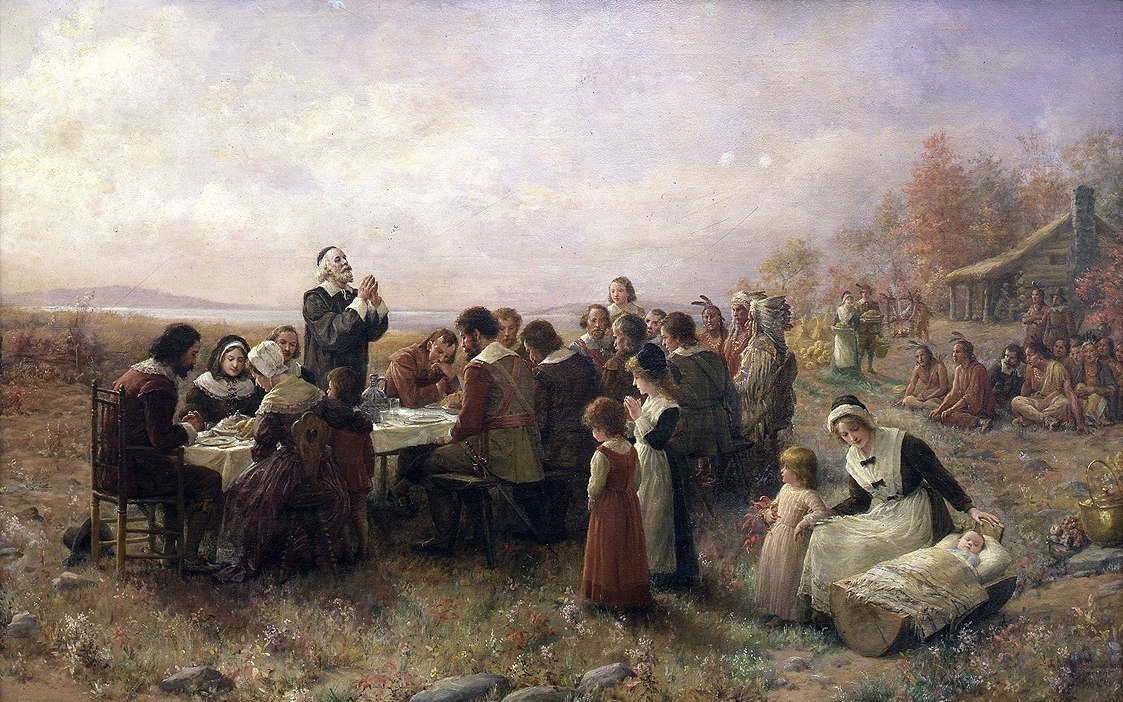
Hey, they made Thanksgiving a national holiday here in the USA - by an act of Congress - in 1942. 

That might be one of the best "Acts of Congress" ever.

"The First Thanksgiving at Plymouth" (1914) by
Jennie A. Brownscombe


Sunday, November 13, 2022

You can't buy Time - Marc already did

If you are reading on a smartphone, use landscape / hold phone sideways. 


I am sure you have heard the expression: "Data is the New Oil"

In a famous roundtable with Microsoft mogul Bill Gates, billionaire investor Warren Buffett said of time: "It's the only thing you can't buy. I mean, I can buy anything I want basically, but I can't buy time."

Well, I guess this is not true, since Time, the pre-eminent weekly newsmagazine of the 20th century, was bought by Marc Benioff, the billionaire co-founder of the software company Salesforce, and his wife, Lynne. [ Full Disclosure: I know Marc and he is one of the good billionaires. We are big fans of Marc and Lynne - top givers to great causes. ]

Jeff Bezos, the founder and CEO of Amazon, bought The Washington Post in 2013. 

Laurene Powell Jobs, the widow of the Apple co-founder Steve Jobs, acquired a majority stake in The Atlantic magazine through her organization, Emerson Collective. 

WHY... do billionaires buy magazines?  We'll come back to this.

In 2006, British mathematician and marketing mastermind Clive Humby said "Data is the new oil." For years, big tech like Facebook, Amazon, Salesforce, Google and even Netflix scooped up incalculable data on all of us. Their business models quickly turned toward becoming the largest attention merchants in the world. They dig and poke and prod us and gather our information, and they do it not to make our lives better, but to keep us on their platforms long enough to sell us things. In response, we have become obsessed and we have addicted ourselves to absorbing it all.

The rich get richer. Their companies get billions in record earnings. And we get billions of wasted hours. Who do I see to get my wasted time back? Time = Life. 

Data is no longer the "new oil" but our TIME is the new oil. More free time in our days is what I (and I guess Warren Buffett) would pay top dollar for.

We need more authoritative and filtered data in our lives leading us to trustworthy sources so we can make fast, accurate decisions. In the business world, we need companies to focus on implementing solutions that don't just focus on operational efficiency but also on our happiness. 

We need our tech leaders to focus on the end result for humans, not just their bottom line. Imagine if social media platforms used similar interests and personality traits to suggest new friends, then helped them to plan shared experiences. Would they lose revenue, or would it generate productivity by saving us time - and helping us to build deeper and more valuable personal relationships? 

We need better data to give us (humans) more time to - live. Trustworthy, highly filtered data will lead us to quicker, smarter decisions for living our lives - and less FOMO (Fear of Missing Out). In turn, this will allow employees to spend more time keeping customers happy, brainstorming better and coming up with more innovative ways to work and spending more time with people closest to them - like family and friends.

Data may once have been the new oil, but being oversaturated by largely biased, unfiltered data has stolen our time and left us less healthy, and even less content. Now, we personally need to prospect for that time, and we need tech companies to reevaluate our time as our most precious commodity. 

WHY... do billionaires buy magazines?  They want your eyeballs at all times because that is where the data comes from. Eyeballs on the dead tree (paper) version of Time magazine, or Time.com - either one works for the data harvesting of our attention. 

I am now the proud owner of CDOdepot.com - as in Chief Data Officer. Think Home Depot for your lifelong data journey. Marc Benioff bought Time, and I bought CDOdepot.com to help you and (any) business to give back / get back your time. After all, we (me, you, Warren Buffett) have better things to do with our time, right? 

"OK, Google: where is the nearest dog park?"


Monday, November 7, 2022

Yeah, but is it a Topia?

If you are reading on a smartphone, use landscape / hold phone sideways. 


The New York Megalopolis

Eutopia is a realistic concept of a good place or something that is attainable. The word utopia, on the other hand, is a place that does not exist. The idea is that in a so-called perfect world, people must put aside their personal interests for the good of the larger group.

A utopia typically describes a community or society that possesses highly desirable or nearly perfect qualities for its members.  

This week, we are hosting (virtually) the annual Zoomtopia - the Zoom users conference. You can attend virtually or live. You can fly to San Jose, California, sure. Or you can attend from your home. Or - you can attend Zoomtopia from the New York Megalopolis. 

A megalopolis is a very large city, or an urban area that consists of several towns and cities. Historians and geographers generally use the word megalopolis when they're talking about a chain of cities whose total population exceeds ten million. The NEW YORK MEGALOPOLIS is the region made up of the cities between Boston and Washington, D.C. 

London, Japan, Dubai, are all now considered to be a megalopolis. Today the world has 28 megacities. Ah, but few are as amazing as the New York MEGALOPOLIS. 

This week, many of the members of the NYDLA (and now, the NADLA) will buy a plane ticket, and fly to San Jose for Zoomtopia. A good ol' fashioned LIVE event, with handshakes and food and adult beverages.

But many will attend Zoomtopia from their homes. And many will attend Zoomtopia from virtual (dare I say) party zones. I happen to live 30 miles West of Time Square, NYC. You know - the center of the known universe. There are 55M+ living in the New York Megalopolis. Some of those 55M+ will attend Zoomtopia from our office on the 29th Floor at 900 3rd Avenue. 

There are 579M+ living in North America. 55M+ of them live in "my" megalopolis. Some live in a Florida megalopolis or in a California megalopolis. We can now attend events (or attend school) LIVE LIVE or LIVE (Virtually) or simply watch the curated and edited recordings. 

Zoomtopia will be LIVE LIVE, and then also LIVE (Virtually) and then you can watch the two days of Zoomtopia via the archives, on demand, at your convenience. 

One again, a utopia typically describes a community or society that possesses highly desirable or nearly perfect qualities for its members. The ability to live, learn, work, play, teach, train, coach, mentor from ANY location, in real-time or via archived recordings, is pretty, pretty, pretty, pretty good. 

Tip of the hat to Larry David.